The Invisible Return: A spillover pathway for EU agricultural research investment


Image credit: Lachlan Turczan / Google, “Making the Invisible Visible,” Milan Design Week 2025.

The Invisible Return: A spillover pathway for EU agricultural research investment

A reflection on evaluation frameworks, spillover effects, and what infrastructure economics might teach us about Horizon tools

Horizon Europe represents one of the most substantial public commitments to agricultural research and innovation in the world, funding multi-actor projects, thematic networks, living labs, and knowledge exchange platforms designed to accelerate the transition to more sustainable, productive, and resilient farming systems. Yet as each programme cycle matures, a familiar challenge tends to re-emerge: how do we demonstrate that this investment actually works?

This article draws on ideas from infrastructure economics to reflect on why the challenge remains, suggesting that the issue may lie not in the absence of impact, but perhaps in where and how we choose to look for it.

What We Measure, and What We Miss

Current evaluation practice in EU agricultural research tends to focus on what programmes produce: scientific publications, technology prototypes, farmer training events, practice-ready guidelines, policy briefs, and social media outreach. These outputs are visible, countable, and reportable. They satisfy audit requirements and feed neatly into monitoring dashboards. But they tell us surprisingly little about whether research investment actually changes what happens on the ground.

The gap between outputs and outcomes is well recognised in the impact assessment literature. Weiβhuhn et al. (2018) reviewed decades of research impact assessment in agriculture and found that evaluations are systematically skewed toward economic and bibliometric indicators, with environmental and behavioural impacts left substantially underassessed despite being arguably the most policy-relevant outcomes in the current Horizon Europe context. More recently, Faure et al. (2024) tested a multi-dimensional societal impact framework across three agricultural research case studies and found that frameworks assuming simple cause-and-effect attribution consistently underperform compared to approaches grounded in contribution logic and systems thinking. In the Horizon agriculture context, a recent EU CAP Network study covering nearly 1,000 Operational Group projects found that while knowledge co-creation was broadly positive, tracing the pathway from project outputs to farm-level behaviour change remained methodologically elusive (EU CAP Network, 2024). This is not a criticism of the projects themselves; it is a reflection of the evaluative tools available to assess them.

Continue reading ”The Invisible Return: A spillover pathway for EU agricultural research investment”
Infrastructure, Green Finance, and Cyber Security: An Afternoon with Professor Naoyuki Yoshino

Text and Photo © 2026 CM Cordeiro

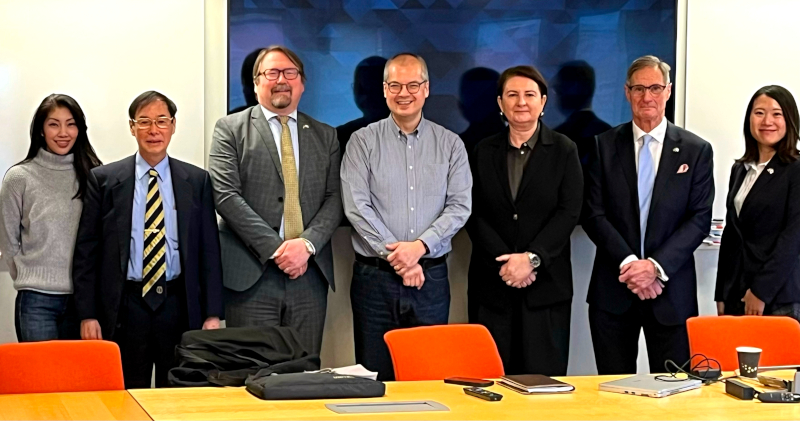
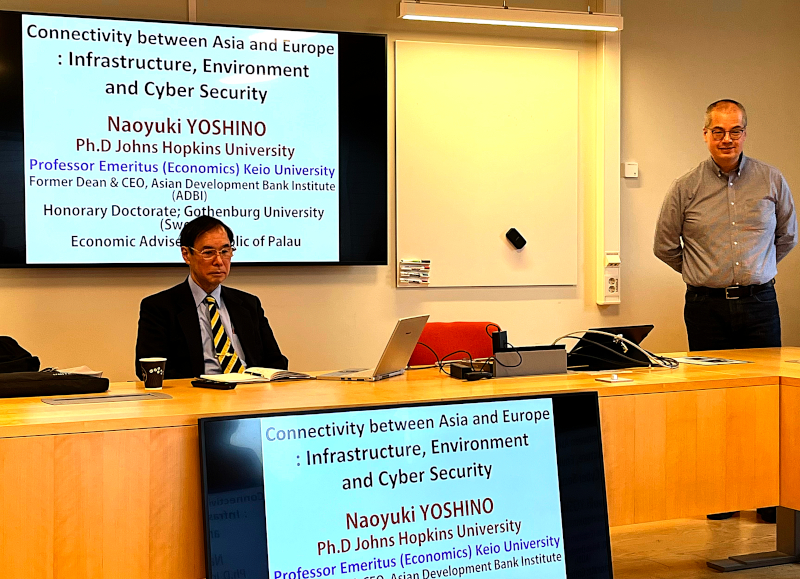
It is not every day that a seminar room fills with the kind of quiet intellectual energy that makes you reach for your notebook before the speaker has even begun. Last week’s gathering at the University of Gothenburg, organised by CERGU (Centre for European Research) and CIBS (Centre for International Business Studies), School of Business, Economics and Law, was one of those occasions.

The guest of honour was Professor Emeritus Naoyuki Yoshino of Keio University, Tokyo, a Johns Hopkins-trained economist whose career spans monetary policy, infrastructure finance, green finance, and most recently, cyber security governance. Professor Yoshino holds an honorary doctorate from the University of Gothenburg, making this visit a homecoming of sorts, and has served as Dean and CEO of the Asian Development Bank Institute (ADBI). He is also Economic Adviser to the Republic of Palau.

Continue reading ”Infrastructure, Green Finance, and Cyber Security: An Afternoon with Professor Naoyuki Yoshino”

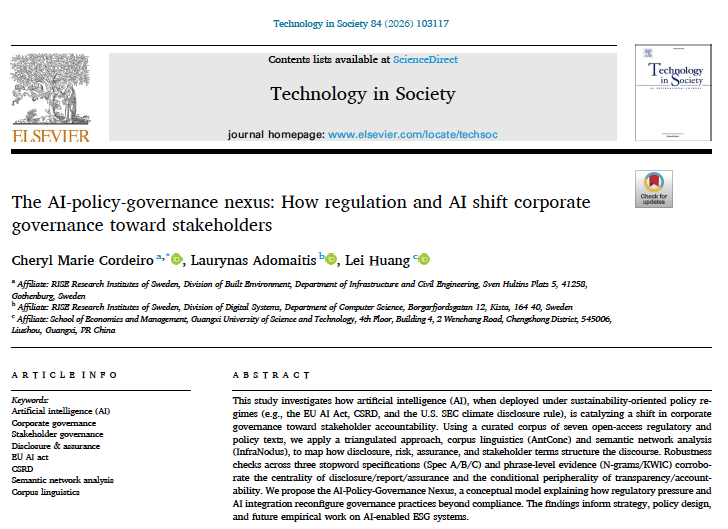
From Text to Networks: How AntConc and InfraNodus Map the AI-Policy-Governance Nexus


  This article reports a methods-focused reading of a curated policy corpus that examines how artificial intelligence (AI), when situated within sustainability-oriented regulation, may be associated with shifts in corporate governance toward stakeholder accountability. The analysis combines corpus linguistics (AntConc) with semantic network techniques (InfraNodus) to move from dense legal language toward a transparent account of recurring concepts and their relations. While any single method has limits, the combined approach is intended to provide both textual evidence and a system-level view, so that substantive claims remain cautious and testable.

Methodology: AntConc and InfraNodus complementarities

  The corpus comprises six (+1 text annex) open-access instruments that, taken together, appear to structure contemporary discussions of AI and sustainability governance across jurisdictions: the EU AI Act, the Corporate Sustainability Reporting Directive (CSRD), the U.S. SEC Climate-Related Disclosure Rule, the EU Green Deal, the OECD AI Principles, and the ASEAN Guide on AI Governance and Ethics. Source PDFs were converted to UTF-8 text, running headers and pagination were removed, article and annex references were preserved, hyphenation was normalized, and domain acronyms (AI, ESRS, SEC, CSRD) were retained to reduce semantic loss.

Continue reading ”From Text to Networks: How AntConc and InfraNodus Map the AI-Policy-Governance Nexus”

Europe Forum Insights 2024/5: Security, Competitiveness, Sustainability

Photo and Text © C.M. Cordeiro 2025.

Integrating Security, Competitiveness, and Sustainability: Insights from Europe Forum Debates 2024/5 and EU Projects

Introduction

Europe faces multiple, overlapping challenges: geopolitical instability, ecological pressures, and concerns over long-term economic competitiveness. These issues are often framed in policy debates as competing priorities. At the Europe Forum events in Turku (2024 and 2025), panelists frequently posed the question of whether EU resources should be directed toward defense and security or toward sustainable growth, cohesion, and agriculture [1]–[4]. This article explores how such framings may overstate the trade-offs. Drawing on Forum debates and ongoing EU projects, it examines the extent to which security, competitiveness, and sustainability can be understood as interdependent dimensions of a coherent European agenda.

1. Security as Competitiveness

At the 2024 Forum session on European competitiveness, it was emphasized that competitiveness is inseparable from security [1]. The upcoming EU Council Presidency was noted as placing emphasis on defense industry financing, border resilience, and energy independence. This reflects a growing recognition that secure borders, reliable energy systems, and resilient food and digital infrastructures underpin Europe’s ability to compete internationally.

Continue reading ”Europe Forum Insights 2024/5: Security, Competitiveness, Sustainability”

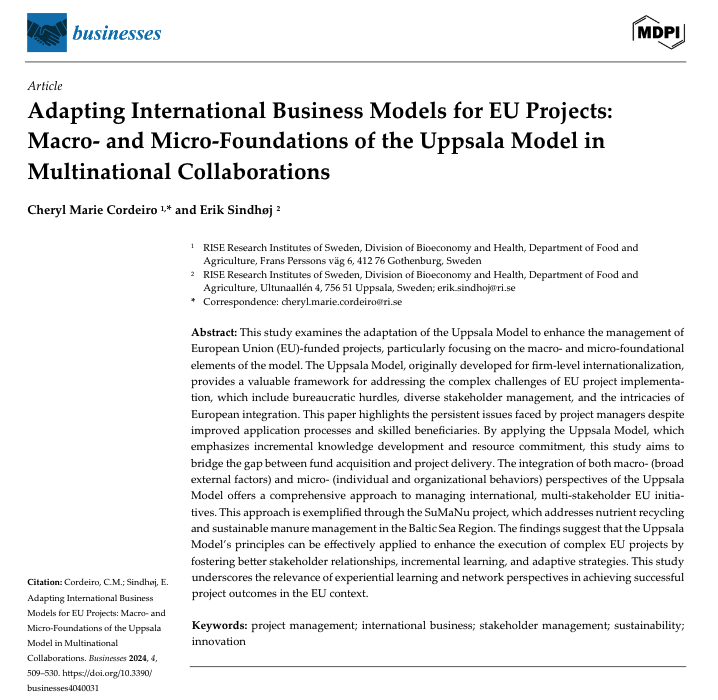
Adapting International Business Models for EU Projects: Macro- and Micro-Foundations of the Uppsala Model in Multinational Collaborations

Reference
Cordeiro, C.M.; Sindhøj, E. Adapting International Business Models for EU Projects: Macro- and Micro-Foundations of the Uppsala Model in Multinational Collaborations. Businesses 2024, 4, 509-530. https://doi.org/10.3390/businesses4040031

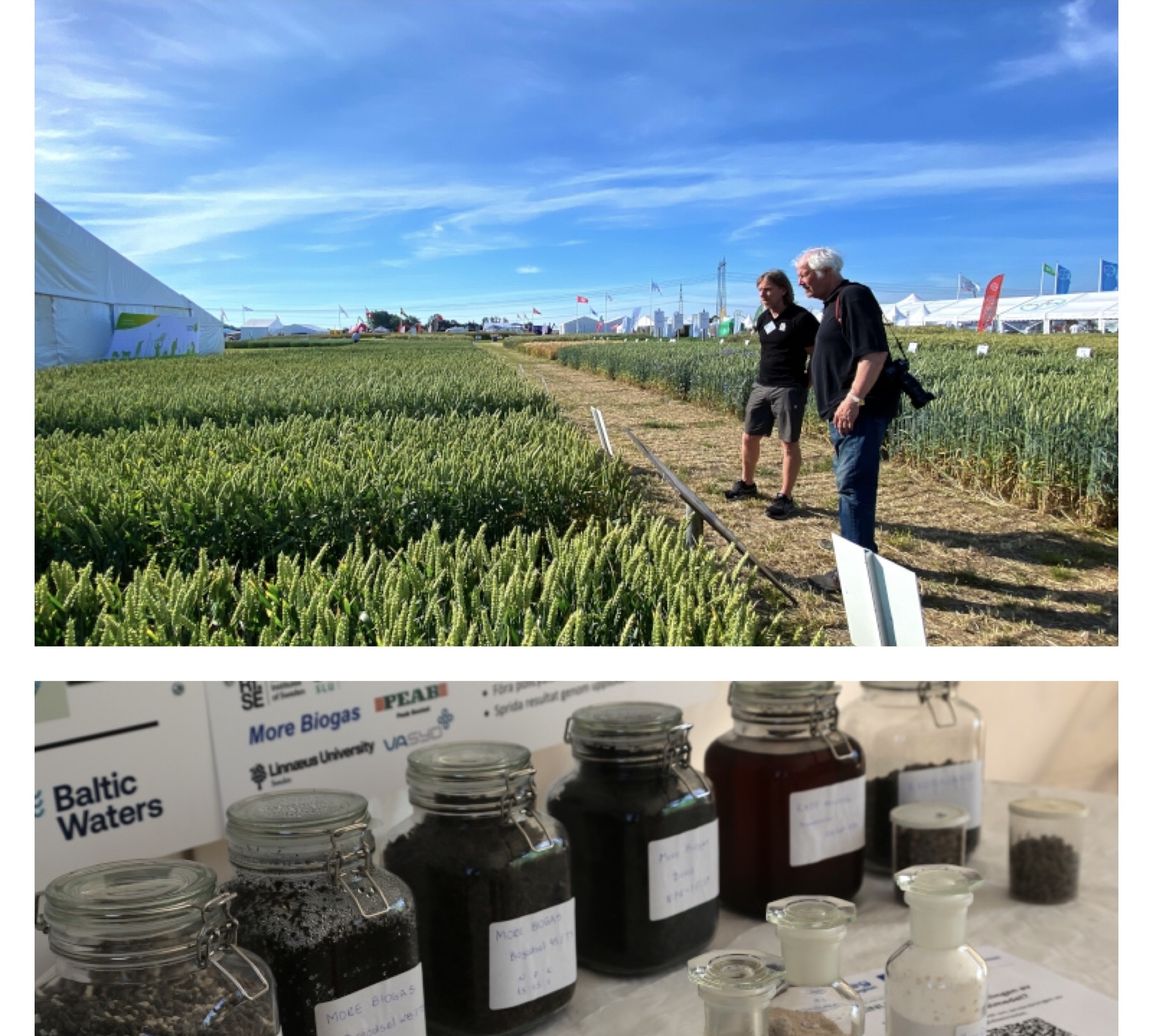
Advancing the Discourse on Recycled Nutrients: Integrating Sustainable Practices into the Circular Economy

Photo © JE Nilsson 2024

Introduction

The growing discourse on recycled nutrients (RNs) in organic farming is influenced by several key factors. Nutrient deficits, particularly of phosphorus (P) and potassium (K), are a significant challenge in organic farming, as biological nitrogen (N) fixation can only partly meet nitrogen demand, necessitating the replenishment of other nutrients through external inputs. Yet the uptake and use of RNs remains challenging. Concerns about contaminants, such as potentially toxic elements (PTEs), microplastics, and antibiotic resistance genes, create doubts among organic farmers regarding the safety and health impacts on soil and crops. Although some contaminants are declining, and soils show resilience in degrading or stabilizing pollutants, uncertainties persist.

The integration of nutrient recycling within the broader circular economy framework aligns with organic farming principles, promoting the reuse of societal waste streams to reduce reliance on finite mineral resources and minimize environmental impacts. However, acceptance of such practices remains debated within the organic sector. Economic feasibility and policy support are crucial, as cost-benefit analyses highlight the varying viability of different ecotechnologies. Technologies like anaerobic digestion of agricultural wastes are more economically viable compared to those in the wastewater sector, which require significant investments. Effective implementation depends on aligning economic and policy incentives with sustainability goals.

Public perception and stakeholder involvement also play a critical role, as participatory decision-making processes address local concerns and improve the legitimacy of implementing new ecotechnologies. Addressing stakeholders’ concerns about health risks, environmental pollution, and technical reliability is essential for broader acceptance. These factors collectively shape the ongoing discussion on the use of RNs in organic farming, balancing the benefits of nutrient recycling with the challenges posed by contamination, economic viability, and public acceptance.

In this article, a brief literature review is conducted to place the current discourse and concerns regarding RNs and nutrient recycling practices within the broader context of the circular economy, aiming to investigate how the uptake of RNs can be more effectively addressed.

Using 9 journal articles [1-9] as example studies of the field, this article begins by tracing the historical context and use of term “recycled nutrients”. It examines the various technological, environmental, economic, and policy-related dimensions of nutrient recycling, and illustrates how the practice of nutrient recycling can become an integral part of the circular economy. Continue reading ”Advancing the Discourse on Recycled Nutrients: Integrating Sustainable Practices into the Circular Economy”

Redefining Energy Innovation: How Strategic Action Fields (SAFs) are Transforming the Energy Landscape

Image credit: Gencraft

What is a Strategic Action Field (SAF)?

Strategic Action Fields (SAFs) [1] are meso-level social orders where various actors—established players, challengers, and sometimes governance units—interact, compete, and collaborate. These fields are characterized by ongoing power struggles, negotiations, and cooperation, leading to the creation of new norms, practices, and institutional arrangements. In the context of societal and technological changes, SAFs can provide a framework for understanding how different sectors converge and evolve through the actions of socially skilled actors who navigate and shape these complex interactions.

Transforming Energy: From Living Labs to Strategic Action Fields, the Example of Germany

In the face of global climate challenges, the transformation of energy systems has become imperative. In the example of Germany, the country’s innovative approach to this transformation is setting a benchmark by bringing together energy, mobility, and Information Technology. In a 2017 [2] study, scientists explore how living labs are evolving into strategic action fields, fostering intersectoral collaboration and innovation. Continue reading ”Redefining Energy Innovation: How Strategic Action Fields (SAFs) are Transforming the Energy Landscape”

The Nexus approach to natural resources management

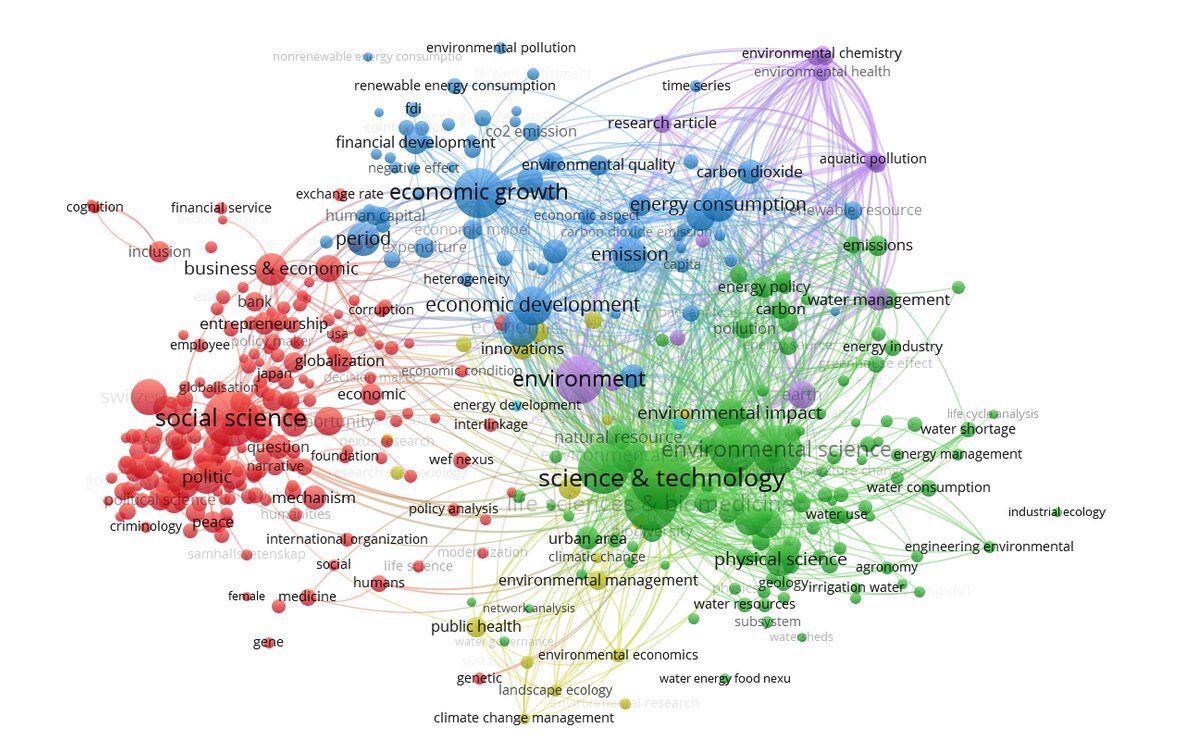
Figure 1. A VOSviewer bibliometric visualization for the keywords, ”nexus”, ”transformative” and ”tools”.

The word and concept of most interest for me this year is nexus, defined broadly as a connected group or series. When placed in the context of natural resources management, a nexus framework renders a system of systems perspective. But which fields of knowledge are reflected in research and current business practices in natural resources management, and how are these various fields of study and business sectors interconnected?

Continue reading ”The Nexus approach to natural resources management”

Consumer Empowerment in Agroecosystems Management


Consumer Empowerment in Agroecosystems Management

Download the article (PDF)

Publication Information
  • Author: Cheryl Marie Cordeiro
  • Publication: Today’s Manager (Official quarterly publication of Singapore Institute of Management)
  • Issue: Issue 4, 2021
  • Pages: 27–29
  • Section: Business / The Nordic Perspective
APA Reference

Standard Format:
Cordeiro, C. M. (2021). Consumer empowerment in agroecosystems management. Today’s Manager, 4, 27–29. Singapore Institute of Management.

Continue reading ”Consumer Empowerment in Agroecosystems Management”

COVID-19 Changes at the Office: Digital Activities that Endured

”`html


COVID-19 Changes at the Office: Digital Activities that Endured

Download the article (PDF)

Publication Information
  • Author: Cheryl Marie Cordeiro
  • Publication: Today’s Manager (Official quarterly publication of Singapore Institute of Management)
  • Issue: Issue 2, 2021
  • Pages: 31–32
  • Section: Business / The Nordic Perspective
APA Reference

Standard Format:
Cordeiro, C. M. (2021). COVID-19 changes at the office: Digital activities that endured. Today’s Manager, 2, 31–32. Singapore Institute of Management.

Continue reading ”COVID-19 Changes at the Office: Digital Activities that Endured”