Microalgae for Antibiotic Removal from Livestock Wastewater

Microalgae-Based Technology for Antibiotic Removal from Livestock Wastewater: Mechanisms, Performance, and EPS Enhancement

Journal of Environmental Management publication

This review was conducted through an international collaboration involving Tianjin Chengjian University, the Agro-Environmental Protection Institute of the Ministry of Agriculture and Rural Affairs in China, the Dali Observation and Experimental Station of National Agricultural Environment, the Key Laboratory of Low-Carbon Green Agriculture in North China and RISE Research Institutes of Sweden.

Abstract

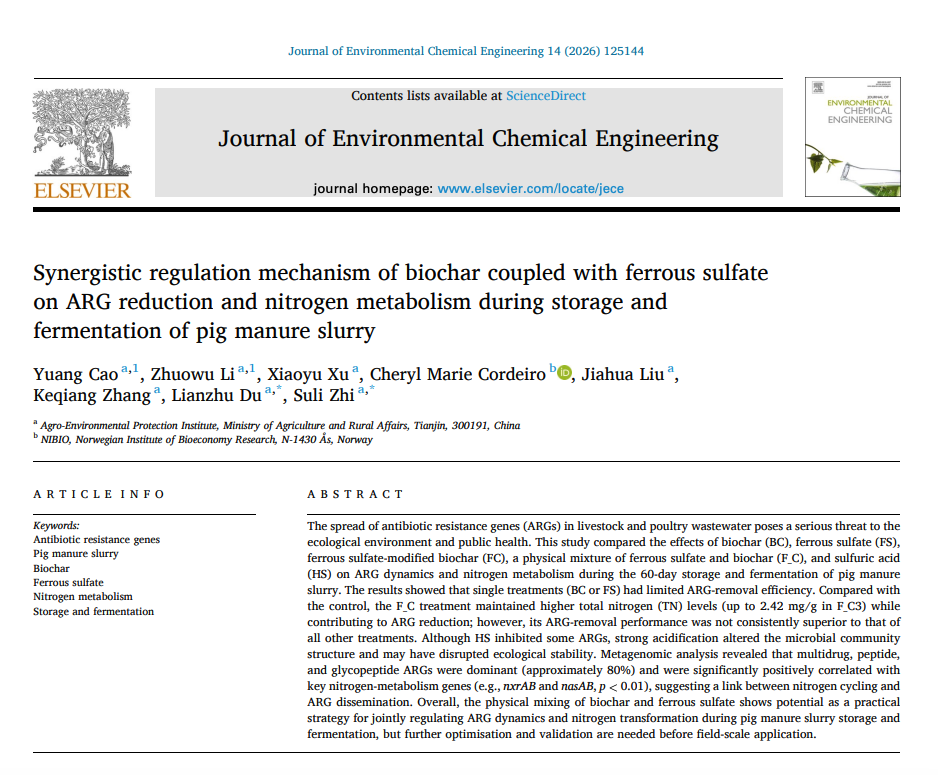
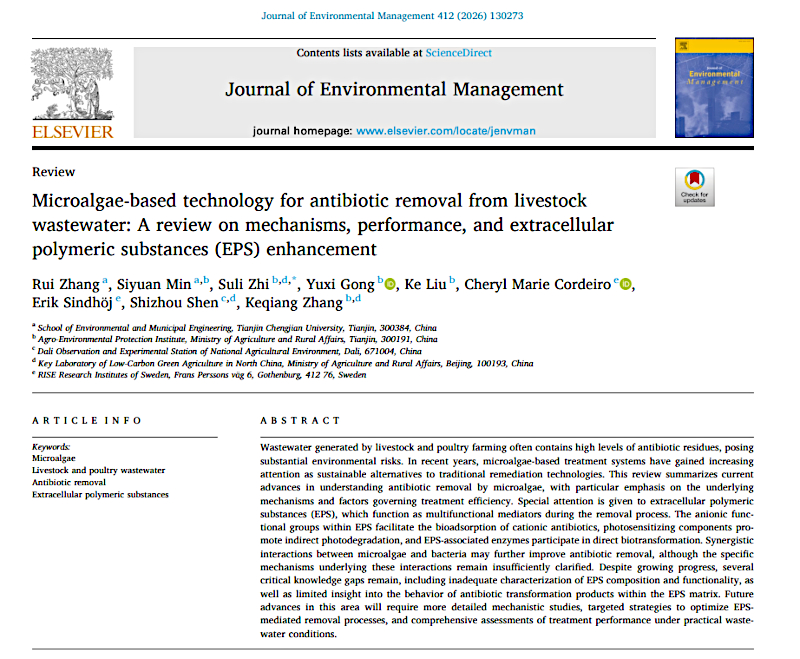
Antibiotic residues released from livestock and poultry farming are increasingly recognised as an important environmental challenge due to their contribution to water pollution and the spread of antimicrobial resistance. This review examines recent advances in microalgae-based wastewater treatment technologies as sustainable alternatives to conventional physicochemical and biological treatment methods.

Particular emphasis is placed on the role of extracellular polymeric substances (EPS), which function as multifunctional interfaces between microalgae and pollutants. The review synthesises current knowledge on the mechanisms through which EPS contribute to antibiotic removal, including bioadsorption, bioaccumulation, photodegradation, enzymatic biotransformation, and synergistic interactions with bacterial communities. It also evaluates the antibiotic removal performance of different microalgal species and discusses environmental factors influencing treatment efficiency.

Beyond summarising the current state of knowledge, the review identifies important research gaps, including the need for a better understanding of EPS composition and functionality, improved characterisation of antibiotic transformation products, and optimisation of EPS-mediated treatment processes under practical wastewater conditions. These insights provide a roadmap for developing more efficient, sustainable and scalable nature-based solutions for livestock wastewater treatment and circular bioeconomy applications.

Keywords

Keywords: Microalgae; livestock wastewater; antibiotic removal; extracellular polymeric substances (EPS); bioadsorption; biodegradation; wastewater treatment; circular bioeconomy; nature-based solutions.

Reference

Zhang, R., Min, S., Zhi, S., Gong, Y., Liu, K., Cordeiro, C. M., Sindhöj, E., Shen, S., & Zhang, K. (2026). Microalgae-based technology for antibiotic removal from livestock wastewater: A review on mechanisms, performance, and extracellular polymeric substances (EPS) enhancement. Journal of Environmental Management, 412, 130273. https://doi.org/10.1016/j.jenvman.2026.130273

Rapid Ammonia Prediction in Pig Manure Composting

Development of a Rapid Ammonia Concentration Prediction Model for Pig Manure Reactor Composting Based on Infrared Spectroscopy

This study was conducted through an international collaboration involving Northeast Agricultural University and the Agro-Environmental Protection Institute of China’s Ministry of Agriculture and Rural Affairs, together with NIBIO the Norwegian Institute of Bioeconomy Research, and the University of Duisburg-Essen in Germany.


Journal of Agro-Environment Science 2026 publication

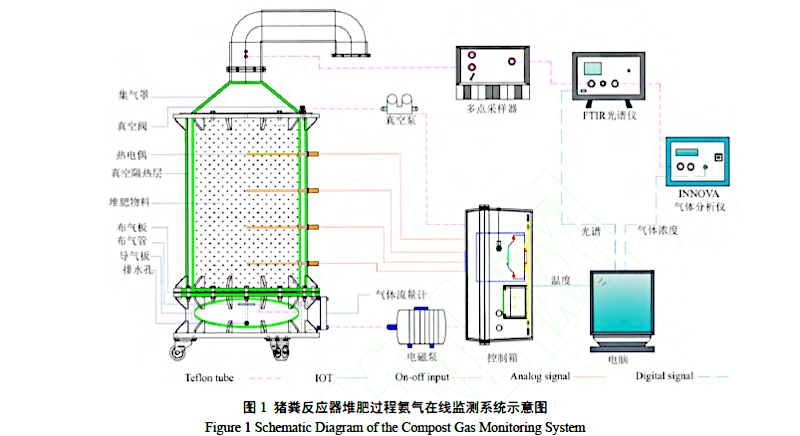
Schematic diagram of the online ammonia monitoring system used during pig manure reactor composting

Abstract

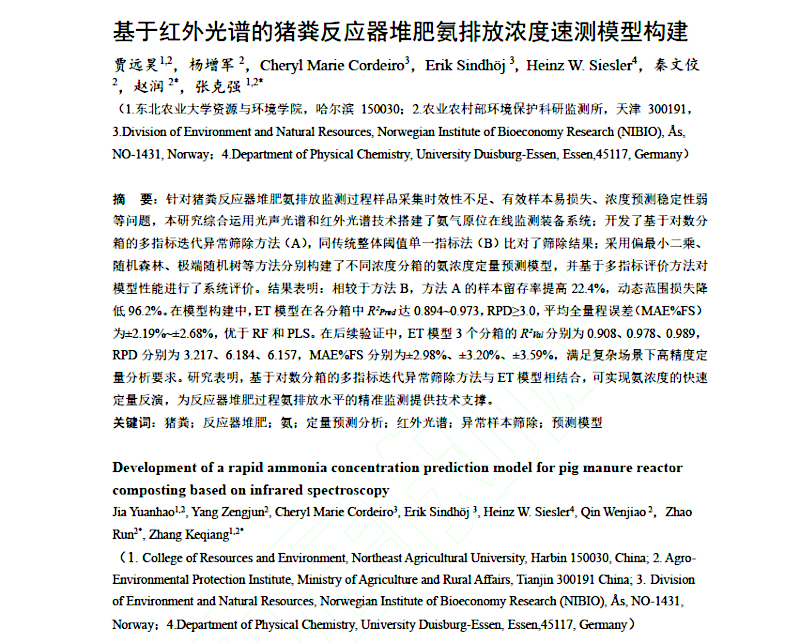
To address the challenges of delayed sample collection, the loss of valid samples, and unstable concentration predictions during the monitoring of ammonia emissions from pig-manure reactor composting, this study developed an in situ online monitoring system integrating photoacoustic spectroscopy and infrared spectroscopy. A multi-indicator iterative outlier-removal method based on logarithmic binning, referred to as Method A, was developed and compared with a conventional single-indicator method using a global threshold, referred to as Method B. Partial least squares regression, random forest, and extremely randomized trees were used to construct quantitative ammonia-concentration prediction models for different concentration bins. Model performance was then systematically assessed using multiple evaluation indicators.

Compared with Method B, Method A increased the sample-retention rate by 22.4% and reduced the loss of dynamic range by 96.2%. During model development, the extremely randomized trees model achieved prediction coefficients of determination ranging from 0.894 to 0.973 across the concentration bins, with residual predictive deviation values of at least 3.0 and mean absolute error as a percentage of full scale ranging from ±2.19% to ±2.68%. Its performance was superior to that of the random forest and partial least squares models.

In subsequent validation, the extremely randomized trees models for the three concentration bins achieved coefficients of determination of 0.908, 0.978, and 0.989, respectively. The corresponding residual predictive deviation values were 3.217, 6.184, and 6.157, while the mean absolute errors as percentages of full scale were ±2.98%, ±3.20%, and ±3.59%, respectively. These results meet the requirements for high-precision quantitative analysis under complex operating conditions.

The findings demonstrate that combining logarithmic binning-based multi-indicator iterative outlier removal with extremely randomized trees enables rapid quantitative prediction of ammonia concentrations. This approach provides technical support for the accurate monitoring of ammonia-emission levels during reactor composting.

Keywords

Keywords: Pig manure; reactor composting; ammonia; quantitative prediction; infrared spectroscopy; outlier removal; prediction model.

Reference

Jia, Y., Yang, Z., Cordeiro, C. M., Sindhöj, E., Siesler, H. W., Qin, W., Zhao, R., & Zhang, K. (2026). 基于红外光谱的猪粪反应器堆肥氨排放浓度速测模型构建 / Development of a rapid ammonia concentration prediction model for pig manure reactor composting based on infrared spectroscopy. 农业环境科学学报 / Journal of Agro-Environment Science. Advance online publication. PDF download.

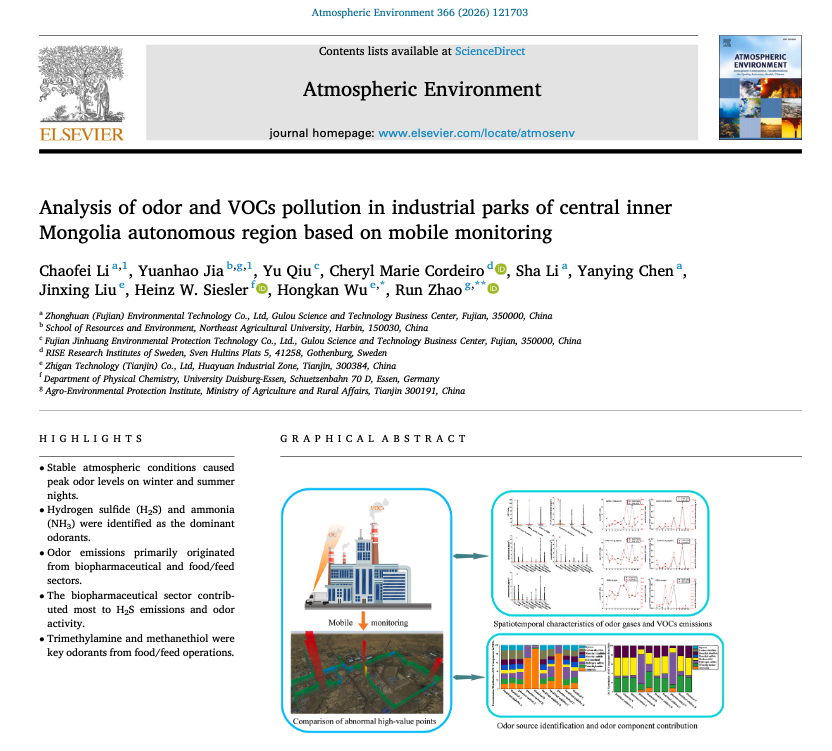
Mobile Monitoring Reveals Industrial Odor Hotspots in Inner Mongolia

Graphical abstract showing mobile monitoring of odor and VOCs in industrial parks

Industrial odor pollution remains one of the most challenging environmental issues to address. Unlike visible emissions or easily quantifiable pollutants, odors are transient, spatially variable, and often escape detection by conventional fixed-site monitoring stations. A new study published in Atmospheric Environment demonstrates how mobile monitoring technology can transform our understanding of industrial odor emissions, and points toward more effective regulatory strategies.

The Challenge: Persistent Odor Complaints Despite Low VOC Levels

The Tuoketuo Industrial Park in Hohhot, Inner Mongolia, hosts a dense cluster of biopharmaceutical, coal-chemical, and food processing facilities. Despite reporting relatively low total volatile organic compound (TVOC) concentrations, the region has experienced a 15% year-on-year increase in odor complaints. This disconnect between measured pollutant levels and community experience highlights a fundamental limitation of mass-based air quality metrics.

Continue reading ”Mobile Monitoring Reveals Industrial Odor Hotspots in Inner Mongolia”

Digital tools for nutrient value chain management in circular wastewater and manure systems

As dairy farms move toward more data-driven nutrient management, near-infrared spectroscopy (NIRS) is emerging as a practical tool. It enables rapid, non-destructive analysis of slurry nutrients directly on-farm, reducing the need for frequent laboratory testing.

However, one key challenge is often underestimated, temperature. Slurry in barns, tanks, and lagoons rarely stays at a constant temperature. It changes with seasons, time of day, and position in the manure management chain. These fluctuations can distort NIR spectra and, if not properly understood, lead to unreliable nutrient predictions.

A recent article in Microchemical Journal by Wang et al. (2025) addresses this issue using advanced spectral methods to examine how temperature reshapes the NIR signature of dairy slurry and what this means for real-time sensing in practice.

Continue reading ”Digital tools for nutrient value chain management in circular wastewater and manure systems”

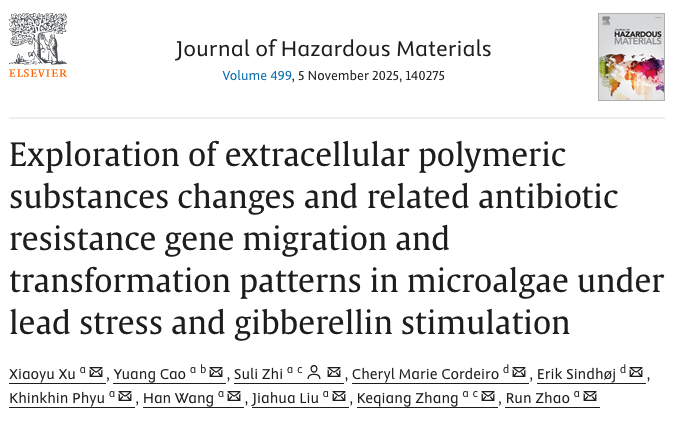
How Microalgae Combat Antibiotic Resistance in Wastewater

Microalgae-based wastewater treatment

Our new study, now published in the Journal of Hazardous Materials, reveals promising insights into using microalgae to tackle one of agriculture’s most pressing environmental challenges: the spread of antibiotic resistance genes (ARGs) in livestock wastewater.

The Challenge

Nearly 55% of antibiotics used in China are applied in livestock farming, creating a major pathway for antibiotic resistance genes to enter the environment through farm wastewater. These genes pose serious risks to ecosystems and human health, making their removal from wastewater a critical priority. Similar risks are emerging in aquaculture, where high-nutrient effluents containing antibiotic residues and resistance genes threaten surrounding waters, highlighting the need for robust, nature-based treatment solutions across both terrestrial and aquatic production systems.

An Innovative Approach

Our international research team, including collaborators from RISE Research Institutes of Sweden and China’s Agro-Environmental Protection Institute (AEPI) under China´s Ministry of Agriculture and Rural Affairs (MARA), investigated how the microalga Chlorella pyrenoidosa responds to environmental stressors while treating dairy farm wastewater. Specifically, we examined the combined effects of lead stress and gibberellin (a plant hormone) stimulation on microalgal performance, bacterial communities, and ARG removal.

Continue reading ”How Microalgae Combat Antibiotic Resistance in Wastewater”

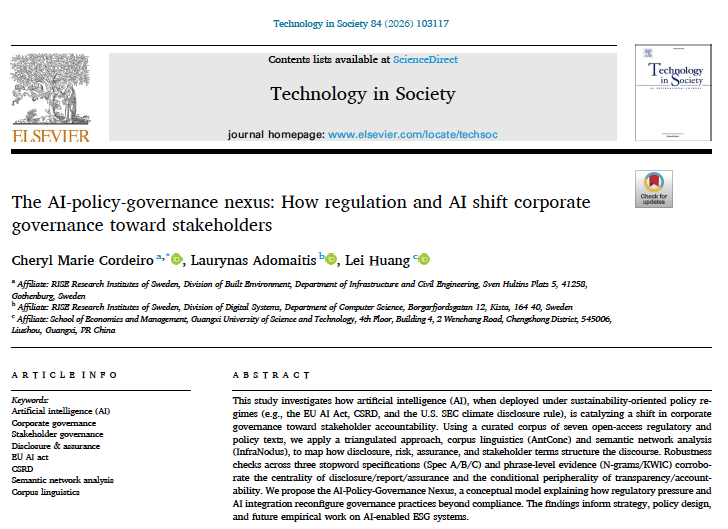
From Text to Networks: How AntConc and InfraNodus Map the AI-Policy-Governance Nexus


  This article reports a methods-focused reading of a curated policy corpus that examines how artificial intelligence (AI), when situated within sustainability-oriented regulation, may be associated with shifts in corporate governance toward stakeholder accountability. The analysis combines corpus linguistics (AntConc) with semantic network techniques (InfraNodus) to move from dense legal language toward a transparent account of recurring concepts and their relations. While any single method has limits, the combined approach is intended to provide both textual evidence and a system-level view, so that substantive claims remain cautious and testable.

Methodology: AntConc and InfraNodus complementarities

  The corpus comprises six (+1 text annex) open-access instruments that, taken together, appear to structure contemporary discussions of AI and sustainability governance across jurisdictions: the EU AI Act, the Corporate Sustainability Reporting Directive (CSRD), the U.S. SEC Climate-Related Disclosure Rule, the EU Green Deal, the OECD AI Principles, and the ASEAN Guide on AI Governance and Ethics. Source PDFs were converted to UTF-8 text, running headers and pagination were removed, article and annex references were preserved, hyphenation was normalized, and domain acronyms (AI, ESRS, SEC, CSRD) were retained to reduce semantic loss.

Continue reading ”From Text to Networks: How AntConc and InfraNodus Map the AI-Policy-Governance Nexus”

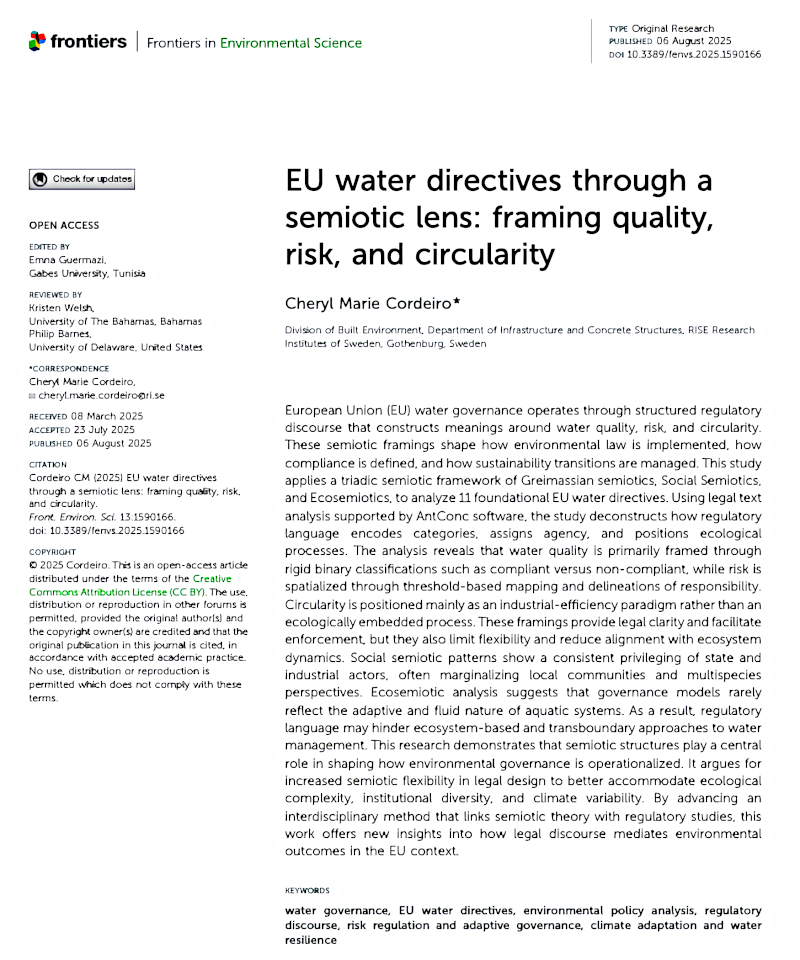
New publication: EU Water Directives through a Semiotic Lens: Framing Quality, Risk, and Circularity

Published in Frontiers in Environmental Science, August 2025
Cordeiro, C.M. (2025). EU water directives through a semiotic lens: Framing quality, risk, and circularity. Frontiers in Environmental Science, 13:1590166.

The European Union’s water governance framework is widely recognized for its clear legal architecture, offering predictable compliance structures and harmonized standards across Member States. Yet, the language that enables this clarity and coordination may also influence how environmental concepts are interpreted and implemented. Understanding how such language constructs meaning is essential for evaluating both the strengths and limitations of EU water policy.

Beyond Compliance: The Power of Language in Policy

EU water law not only regulates environmental behavior; it also plays a constitutive role in shaping how key policy concepts such as quality, risk, and circularity, are defined and operationalized. This study applies a triadic semiotic framework, drawing on Greimassian structuralism, Social Semiotics, and Ecosemiotics, to examine 11 foundational EU water directives, including the Water Framework Directive, the Nitrates Directive, and the Water Reuse Regulation. Through this lens, the analysis explores how regulatory texts frame environmental priorities, assign agency, and embed specific worldviews that influence implementation and policy outcomes.

Continue reading ”New publication: EU Water Directives through a Semiotic Lens: Framing Quality, Risk, and Circularity”

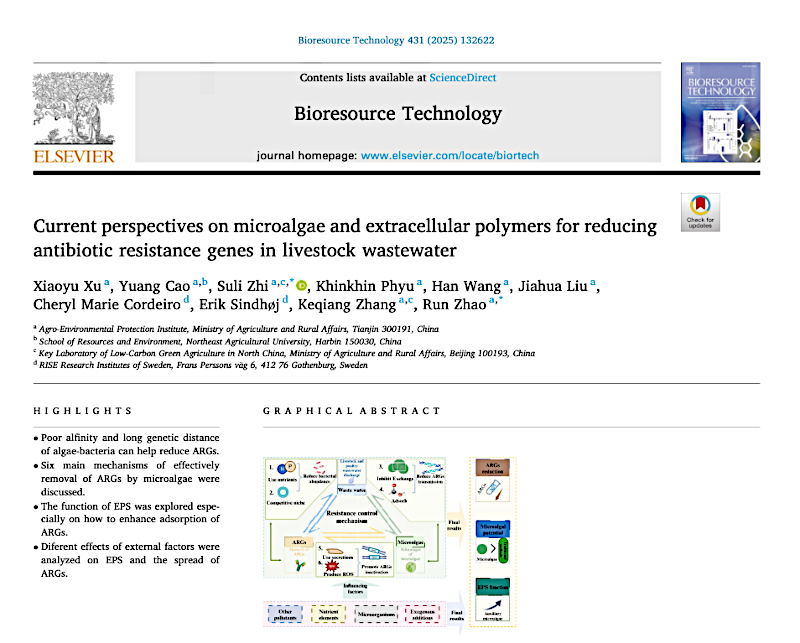
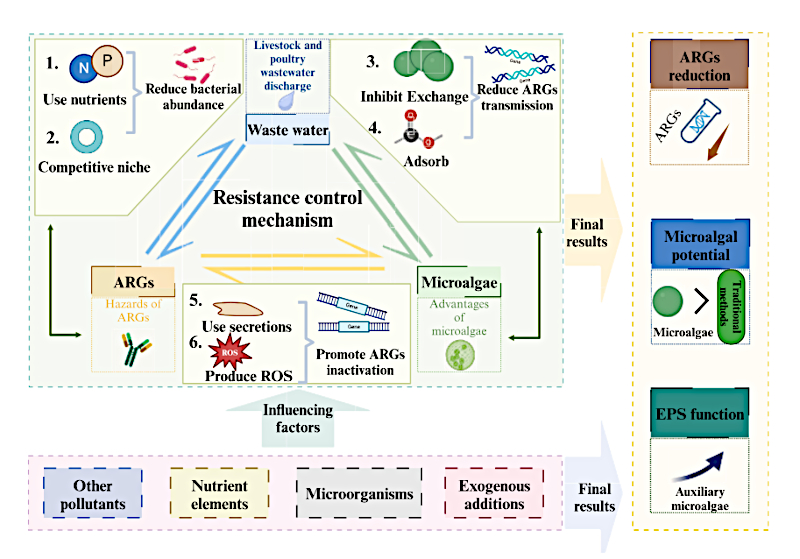
Microalgae and EPS for Mitigating Antibiotic Resistance in Livestock Wastewater

Antibiotic resistance is one of the most pressing challenges in both environmental and public health domains. A growing body of research is exploring nature-based solutions to mitigate the spread of antibiotic resistance genes (ARGs), particularly in agricultural systems. A new study published in Bioresource Technology contributes to this field by examining the potential of microalgae and extracellular polymeric substances (EPS) to reduce ARGs in livestock wastewater.

🔗 Read the full article: https://doi.org/10.1016/j.biortech.2025.132622

Overview of the Study

The research, led by Xiaoyu Xu and a multidisciplinary team from China and Sweden, investigates the interactions between algae and EPS and their role in mitigating the spread of ARGs in contaminated livestock water. As the agricultural sector is a known hotspot for antibiotic use and discharge, developing effective treatment strategies is both urgent and impactful.

Continue reading ”Microalgae and EPS for Mitigating Antibiotic Resistance in Livestock Wastewater”

Situating the discourse of recycled nutrient fertilizers in circular economy principles for sustainable agriculture

The article explores the multifaceted discourse surrounding recycled nutrient fertilizers (RNFs), examining their technological, environmental, economic, and policy-related dimensions. It highlights how stakeholders’ perceptions and the influence of public and farmer acceptance shape the adoption of RNFs, alongside the critical impact of regulatory and policy frameworks on their implementation.

Citation: Cordeiro CM and Sindhøj E (2024) Situating the discourse of recycled nutrient fertilizers in circular economy principles for sustainable agriculture. Front. Sustain. 5:1465752. doi: 10.3389/frsus.2024.1465752