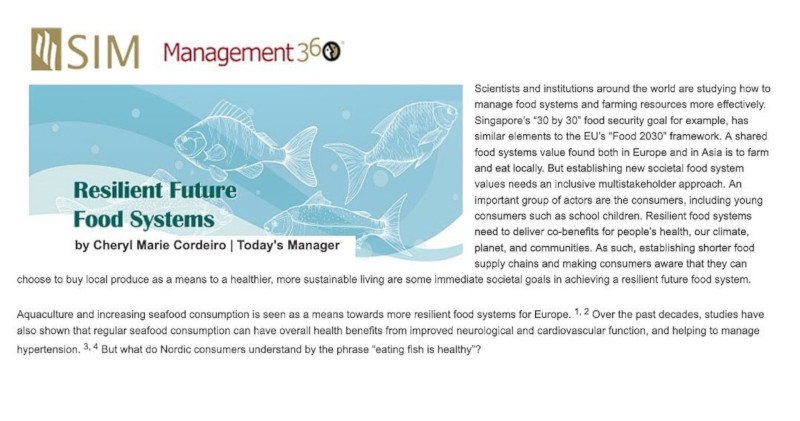
Consumer Empowerment in Agroecosystems Management


Consumer Empowerment in Agroecosystems Management

Download the article (PDF)

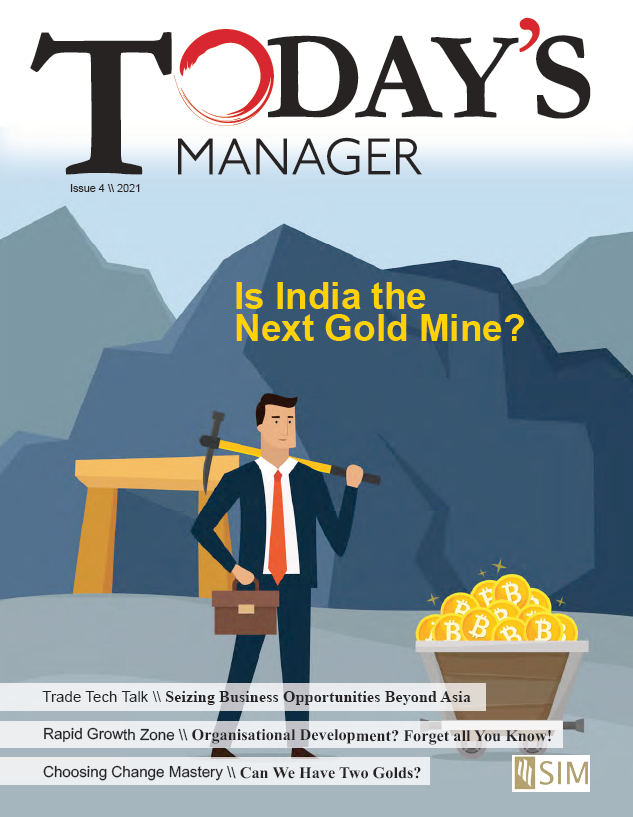
Publication Information
  • Author: Cheryl Marie Cordeiro
  • Publication: Today’s Manager (Official quarterly publication of Singapore Institute of Management)
  • Issue: Issue 4, 2021
  • Pages: 27–29
  • Section: Business / The Nordic Perspective
APA Reference

Standard Format:
Cordeiro, C. M. (2021). Consumer empowerment in agroecosystems management. Today’s Manager, 4, 27–29. Singapore Institute of Management.

Continue reading ”Consumer Empowerment in Agroecosystems Management”

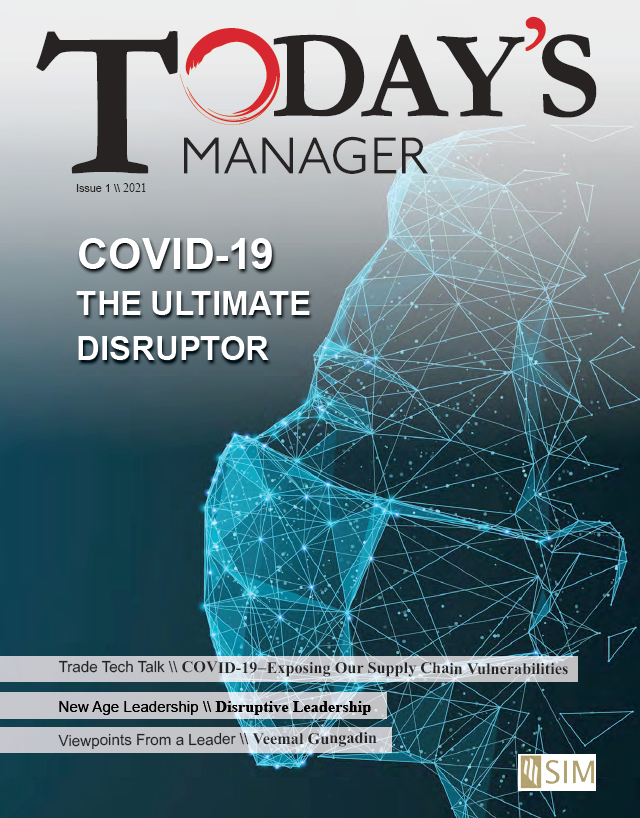
COVID-19 Changes at the Office: Digital Activities that Endured

”`html


COVID-19 Changes at the Office: Digital Activities that Endured

Download the article (PDF)

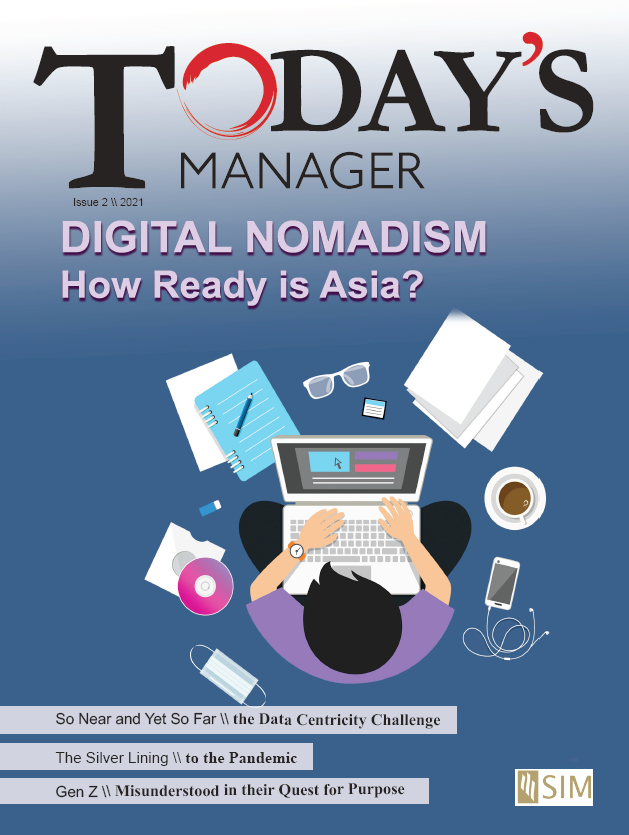
Publication Information
  • Author: Cheryl Marie Cordeiro
  • Publication: Today’s Manager (Official quarterly publication of Singapore Institute of Management)
  • Issue: Issue 2, 2021
  • Pages: 31–32
  • Section: Business / The Nordic Perspective
APA Reference

Standard Format:
Cordeiro, C. M. (2021). COVID-19 changes at the office: Digital activities that endured. Today’s Manager, 2, 31–32. Singapore Institute of Management.

Continue reading ”COVID-19 Changes at the Office: Digital Activities that Endured”

Farm-to-fork Marketing Strategies during COVID-19


Farm-to-fork Marketing Strategies during COVID-19

Article Details

Download the article (PDF)

Publication Information
  • Author: Cheryl Marie Cordeiro
  • Publication: Today’s Manager (Official quarterly publication of Singapore Institute of Management)
  • Issue: Issue 1, 2021
  • Pages: 23–24
  • Section: Business / The Nordic Perspective
APA Reference

Standard Format:
Cordeiro, C. M. (2021). Farm-to-fork marketing strategies during COVID-19. Today’s Manager, 1, 23–24. Singapore Institute of Management.

Continue reading ”Farm-to-fork Marketing Strategies during COVID-19”

Book chapter publications, edited series

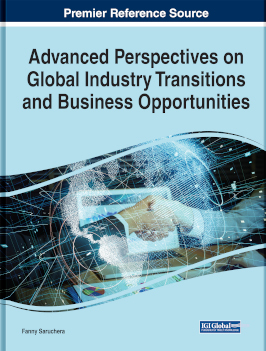
Chapter 2 Emerging management concepts in an era of global transitions:Co-management of natural resources and the Swedish management style.

Reference Cordeiro, C. M. (2021). Emerging management concepts in an era of global transitions: Co-management of natural resources and the Swedish management style. In Saruchera, F. (Ed.), Advanced Perspectives on Global Industry Transitions and Business Opportunities (pp. 21-39). IGI Global. http://doi:10.4018/978-1-7998-4303-0.ch002

Abstract In a period of global transition, this chapter discusses emerging management practices in the context of natural resources management in international business. In the past decades, the co-management concept and practice have been of increasing interest to scholars in ecology management and marine environment management. In the late 1980s, the Swedish management style began to be explicitly de-bated with scholarly interest, particularly in the services industry after observing successful business practices. The literature on the co-management of natural resources and the Swedish management style in multinational enterprises point promisingly towards parallel management strategies applied in dis-tinctly different working environments and contexts. Based on empirical data, this chapter’s objective is to highlight and distill from natural resources co-management and the Swedish management style a shared management best-practice approach in working contexts that have multiple actors and stakehold-ers who hold multicentric agendas.

Chapter 9 Culture from a value systems perspective: A study of CATCH, an interdisciplinary research project in fisheries and aquaculture in Norway

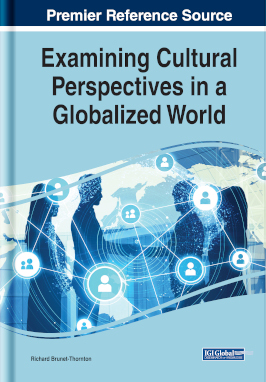
Reference Cordeiro, C.M. & Sogn-Grundvåg, G. (2020). Culture from a value systems perspective: A study of CATCH, an interdisciplinary research project in fisheries and aquaculture in Norway. In R. Brunet-Thornton (ed), Examining Cultural Perspectives in a Globalized World. Hershey, PA: IGI Global. doi: 10.4018/978-1-7998-0214-3

Abstract International interdisciplinary projects (IDR) are a microcosm of multicultural landscapes. Through a culture theories perspective, in particular, viewing culture as a system of explicitly and implicitly coded values, this chapter conveys the processes and results of a study that investigates and uncovers the management strategies of an IDR project, CATCH. The study of culture from a value systems approach enables a more subtle and nuanced approach to the analysis and framing of cultural heterogeneity in the context of an IDR project, beyond the often dichotomous, cultural dimensions construct. Due to the multiple actors in an IDR project, the example of CATCH illustrates too, a more nuanced view of cultural filters that arise from each academic discipline. Using the culture as value systems perspective, this chapter shows how multicultural landscapes and different resulting knowledges can be leveraged towards an integrated worldview when solving challenges in a globalized world with limited resources.

Continue reading ”Book chapter publications, edited series”

Vertical farms and the complex relationships between energy use in food systems, food production and energy resource constraints

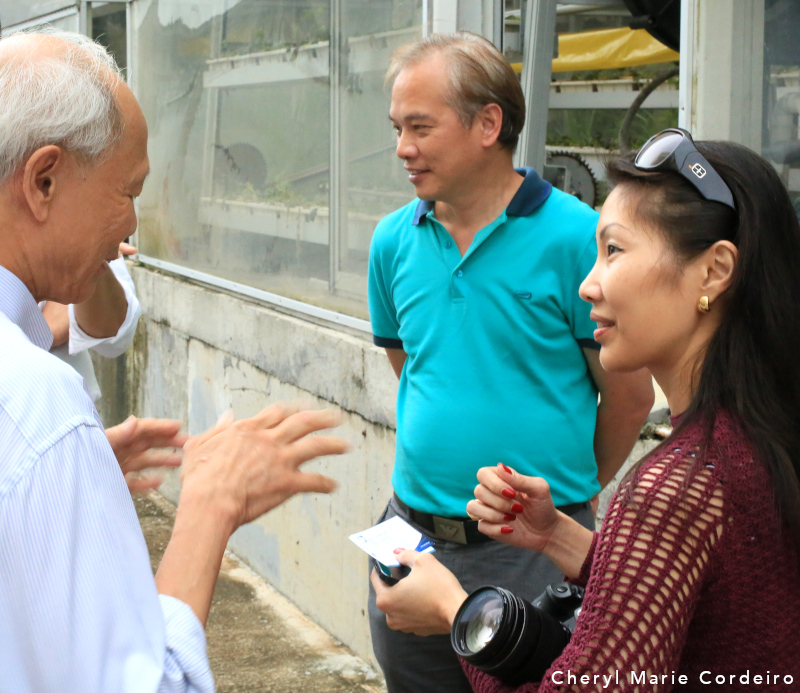
From 2016, standing in a group discussion with Jack Ng, who is an engineer, and the Founder of Sky Greens Singapore. Sky Greens was founded in 2012.
Text & Photo © JE Nilsson & CM Cordeiro 2021

The current Horizon Europe Work Programme 2021-2022 for Food, Bioeconomy Natural Resources, Agriculture and Environment [1] acknowledges a need to address the complex relationships between energy use in food systems, food system productivity and energy resource constraints. Product type, mode of transport, food waste, energy-related food system greenhouse gas (GHG) emissions, and energy efficiencies in geographies of production along with economies of scale are some of the interacting variables in the food-energy network [2,3]

In Sweden, about 26% of the greenhouse gases emitted come from agricultural activities [2]. Traditional farming practices and food production techniques concurrent with urbanization and globalization are energy intensive. With concurrent urbanization, globalization and changes in demography, the importance of energy use in food systems has become a global food security concern [3], particularly when some studies have shown that crop yields increase in close association with energy inputs [4].

The European regional concerns reminded me of a visit to Sky Greens in Singapore in 2016. I was in Singapore to attend the Responsible Business Forum conference held at Marina Bay Sands, and I had the opportunity too at the time, to visit the world´s first low carbon, hydraulic driven vertical vegetable farm and meet its Founder, Jack Ng.

Continue reading ”Vertical farms and the complex relationships between energy use in food systems, food production and energy resource constraints”

Bi-lateral learning in natural resources co-management and the Swedish management style

Crab from the Swedish west coast, Sweden.
Text & Photo © Pixabay Ylvers-337353, JE Nilsson & CM Cordeiro 2019

As I began reading more literature on marine and fisheries management, I observed how management concepts in the field of natural resources management were framed differently than those found in international business (IB) studies.

Most IB management theories focused on the efficiency of the processes of the manufacturing sector and firm internationalization strategies [1, 2], whereas natural resources management had the ecological dimension factored into their management models and strategies even if their processes included global manufacturing [3, 4]. I would today reason that IB studies also encompasses an ecological dimension, but they are framed predominantly from the perspective of human resources management or organizational culture and behaviour.

Continue reading ”Bi-lateral learning in natural resources co-management and the Swedish management style”