
Can reshaping microbial communities help reduce antibiotic resistance genes in livestock wastewater?
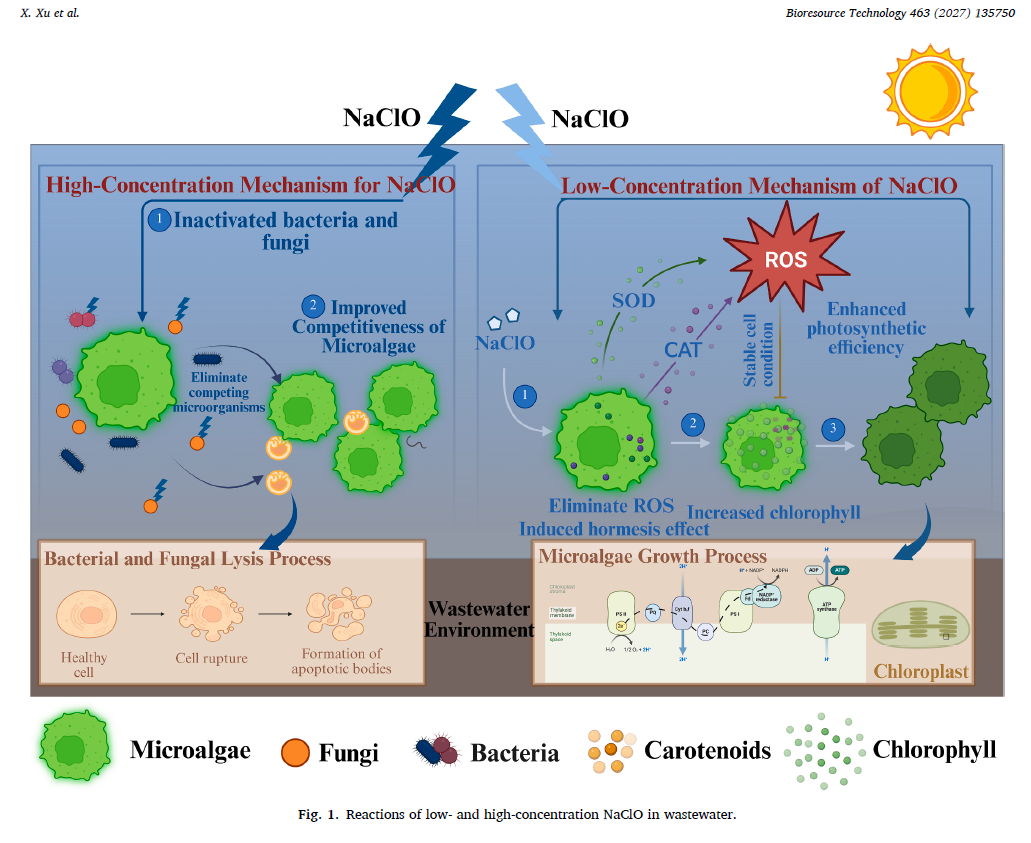
Our study explores how low-dose sodium hypochlorite (NaClO) pretreatment can support microalgal treatment of dairy-farm wastewater. The laboratory findings point to microbial community shifts as an important part of reducing antibiotic resistance gene (ARG) abundance.

Promising reductions in the laboratory
With 1 mg/L NaClO pretreatment and the indigenous strain S2, we observed an 81.7% reduction in the summed abundance of the 15 predominant ARGs. Across the treatment conditions tested, maximum removal of total nitrogen and chemical oxygen demand (COD), an indicator of organic pollution, reached 81.5% and 70.7%, respectively.
The findings associate lower ARG abundance with changes in bacterial community composition and declines in potential bacterial hosts of these genes. This highlights the role of microbial ecology in treatment performance.
From laboratory findings to practical treatment
These results are promising, but effects on horizontal gene transfer—the movement of genetic material between microorganisms—remain unconfirmed. The study did not distinguish between ARGs inside cells and those outside cells. Scalability, treatment costs and potential carbon benefits also require further evaluation.
The work points towards a useful direction for wastewater treatment: creating conditions that support beneficial interactions between algae and bacteria while reducing nutrients, organic pollution and ARG abundance.
Read the study
Xu, X., Cao, Y., Zhi, S., Liu, J., Cordeiro, C. M., Sindhøj, E., Wang, H., & Zhang, K. (2027). Low–chlorine pretreatment enables microalgae to reduce multi–target pollutants in livestock wastewater: Focus on ARG attenuation via host–community shifts. Bioresource Technology, 463, Article 135750. https://doi.org/10.1016/j.biortech.2026.135750