North of the Bund, Shanghai

nob

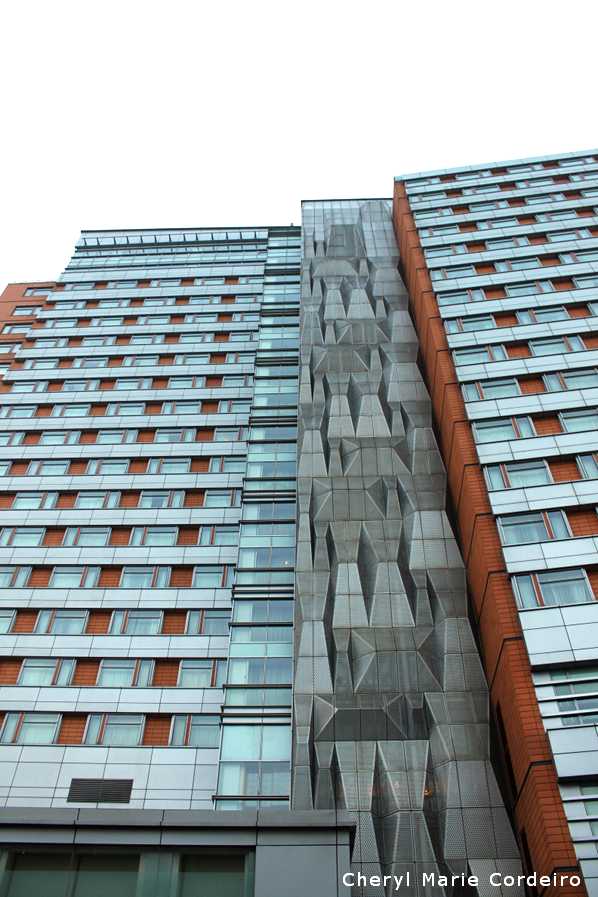
Crowne Plaza Shanghai Fudan Hotel
Text & Photo © JE Nilsson, CM Cordeiro 2013

When looking at the facade of the Crowne Plaza Shanghai Fudan Hotel it is difficult to not read into the facets of its facade some influences from the constructivist art movement that grew out of Russian Futurism in the early years of the 20th century.

Constructivist architecture flourished in the Soviet Union in the 1920s and early 1930s. Its ideas were revolutionary at the time and combined advanced technology and engineering with social purposes.

This era was also a formative one for Shanghai, as it acted as an eastern melting pot between East and West in the Warlord epoque of China in the 1910s, around the years of the Russian revolution and the financial boom of WWI. As such one would not be too surprised to find traces of these ideas right here in the Yangpu district of Shanghai where much of China’s academia flourishes today.

It is even difficult not to draw references to Russian industrialism and earlier, the cubism of Picasso and Braque, in the facets of the facade looking like human beings standing on top of, lifting, carrying and supporting each other. Architecture depicting the human strive to higher and higher achievements.

The Russian bicyclist painting by Natalia Goncharova (Cyclist, 1913) comes to mind as another reference to the Russian futurism of the 1910’s. This can be seen in contrast to the slightly older painting by Ramon Casas, of himself and Pere Romeu on a tandem bicycle, 1897. The two works of art illustrate a dramatic change in ideologies and thus realities, that had come by in a mere few decades. The latter was painted specifically for the interior of the Els Quatre Gats in Barcelona, a restaurant and bar that was pretty much the center of the early Modernisme art movement in Barcelona at the turn of the century, and also the very place where Picasso had his first exhibition.
Continue reading ”North of the Bund, Shanghai”
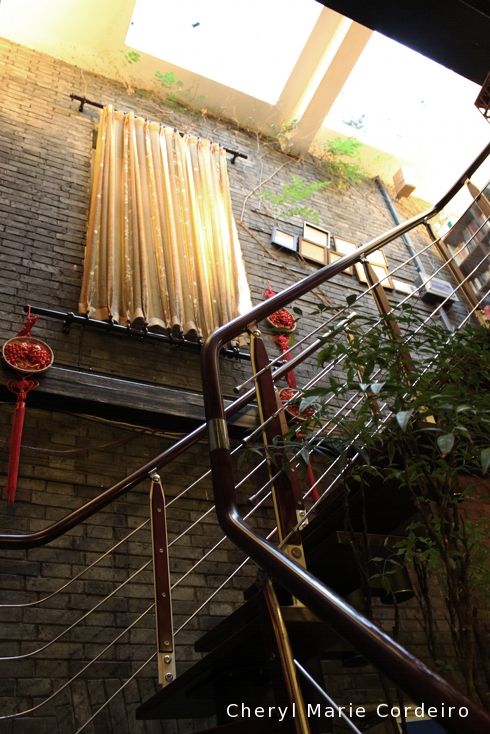
Teahouse in Hangzhou

Teahouse. 高山流水.
Tea-drinking at teahouses is a tradition in China that goes back to the Three Kingdoms of Wei, Wu and Shu, 220-280 AD.

Text & Photo © JE Nilsson, CM Cordeiro 2010-2013

Walking through the streets of Hangzhou, I could never quite grasp the sentimental feelings of its romantic past even as my eye caught the elegant lines of temples, the fine pagodas and the many intricately carved bridges that made the landscape so picturesque.

But arrive at the calm and mirroring waters of West Lake, and the realization sets in – that the city through numerous phases of transformations, carries within its aura a purity of natural beauty and a sense of timelessness. And it is perhaps this, that rocked the souls of the literati both past and present.
Continue reading ”Teahouse in Hangzhou”

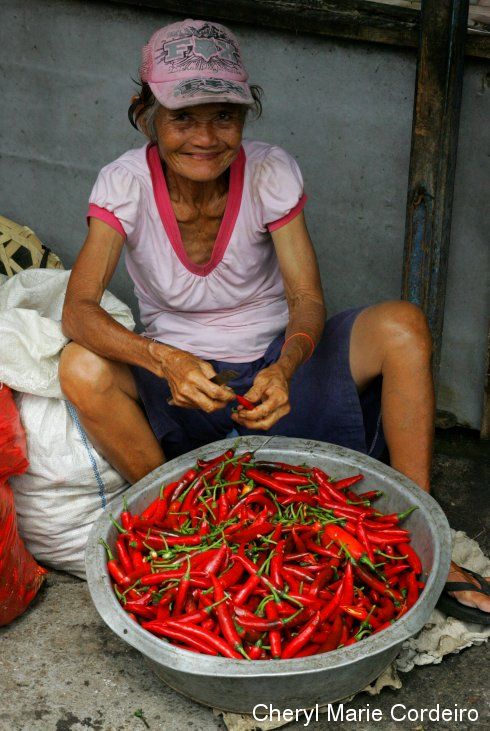
Kuta pasar, after hours, Badung, Bali

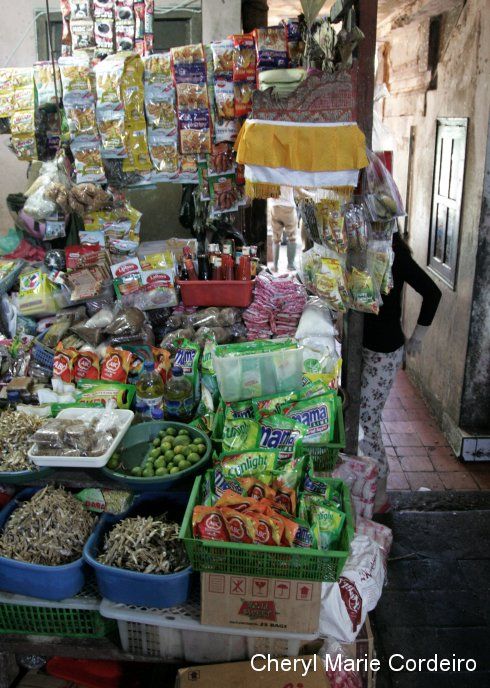
Late morning marketing at Kuta market, Bali.
Text and Photo © JE Nilsson and CM Cordeiro 2012

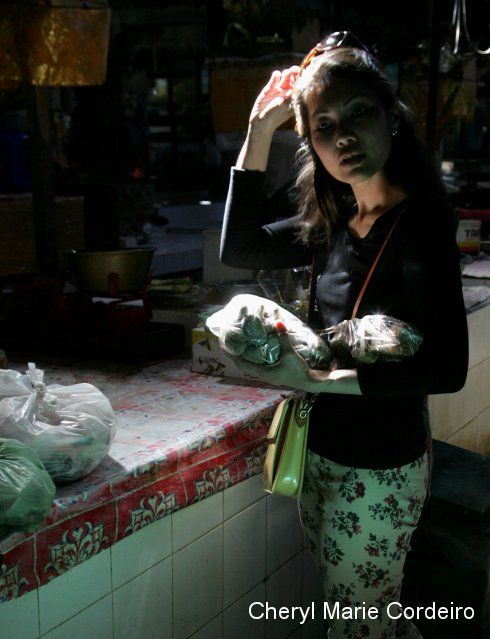
If you live in Southeast-Asia, a piece of information you neeed is the opening or business hours of the morning wet markets. Some beginning as early as 05:30 hrs in the morning, where by late morning at about 10:00 hrs, business is concluded, the stalls washed and goods neatly stashed for the next day’s trading.

In search of pulot hitam at Kuta market, near one of the almost invisible entrances.

Having had some requests for specific goods only to be found in Indonesia and likewise, Bali, I conveyed my brief shopping list to a local taxi driver, who was happy to be our guide to the island. He quickly settled where to go and so we were off towards one of his favourite markets – Kuta pasar – though I had gathered from what he told, I would need to improvise with my spattering of the Malay language since Balinesian and Indonesian languages differ, in order to do my shopping as no one in this market would speak English.

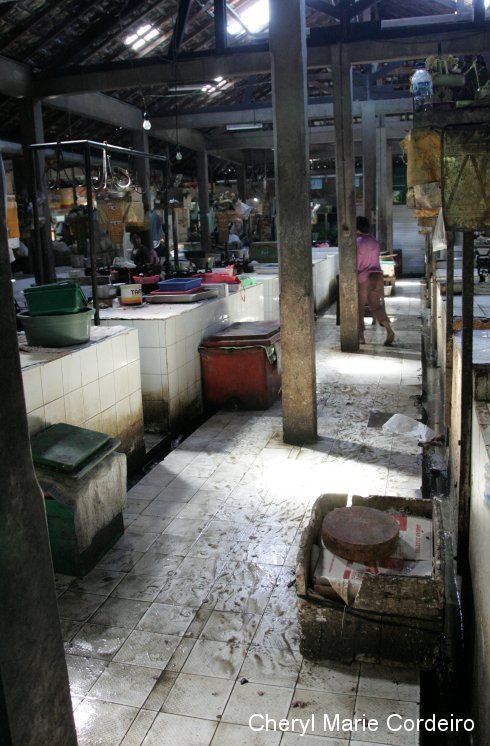
Cleaning up for the day at Kuta pasar.

True to marketing times, when we arrived in the late morning at Kuta pasar, the floors were being washed, and the white tiled counters cleaned. It took a brief moment to orientate ourselves, across language barriers, I managed to locate the stall that sold most items I had wanted to purchase, including pulot hitam, that is black glutinous rice that they call nasi hitam, and gula Bali, a variant of palm sugar produced right on the island.

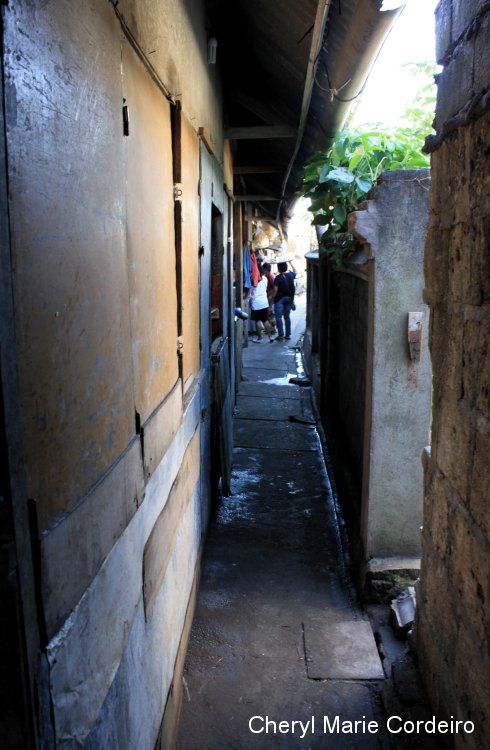
This narrow corridor leads to houses behind the market. On the left and out of sight, food stalls that cater to the local area.

The ground floor to this market is compact, with stalls selling wet goods situated in the center of the square and shops selling dried goods and vegetables, lining the outer rim of the square.

Through one of the back lanes, a narrow path leads to the village houses where two or three stalls selling food can be found. We were invited to try their variety of food from nasi campur (rice with mixed food) that included ikan goreng (fried fish) to mee ayam (chicken noodles).

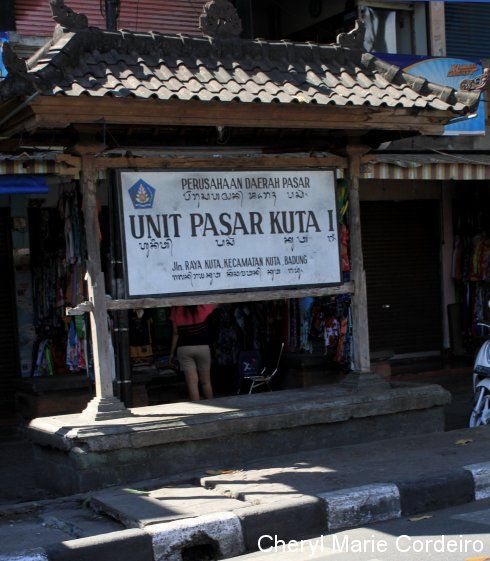
Kuta pasar, Badung. The sign to look for.

Compared to the enormous wet market at Denpasar well equipped with supply chain outlets running as arteries towards the main centre of activities, I think I’m most grateful to the taxi driver for introducing us to this little market square, as another peek into the lives of the locals of this island.

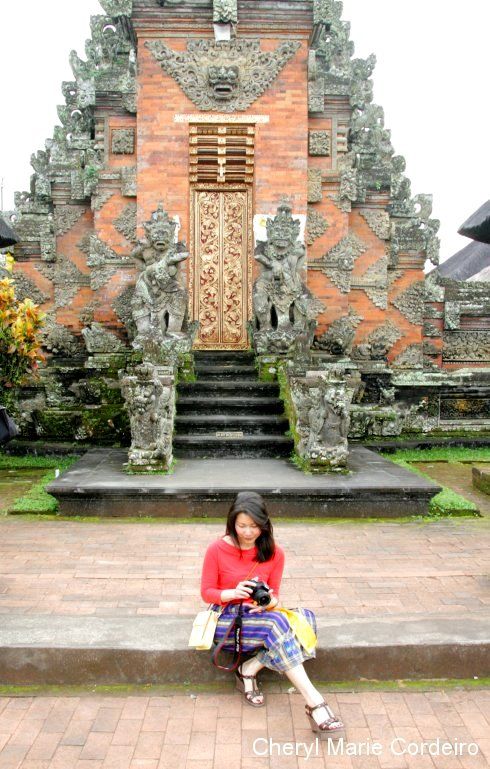
Pura Puseh Desa Batuan, Bali

Residing in Batuan village and founded in c. 1020 AD, the Batuan Temple is a conflux of Indian Hinduism with Indus architecture.
Text and Photo © JE Nilsson and CM Cordeiro 2012

The surprising aspect of this temple visit is the realisation of how accessible local religion and philosophy is made to you as visitor in order to partake of their song, dance, rituals and daily activities that mean a lot to them. One could of course reason that it is all part of the tourism industry here in Bali, but at the same time, there’s the feeling of there being something more to it. There is nothing imposing in the Balinesian behaviour towards visitors, rather it is their subtle invitation and hospitality that make you feel all at once at home on this island even if for a few days. Continue reading ”Pura Puseh Desa Batuan, Bali”

A walk through Pasar Badung, Denpasar, Bali

Along the side streets towards Pasar Badung in Denpasar, off Jl. Gajah Mada, you’ll find a small curry shop passionately preparing the foundational ingredients to many local dishes.
Text and Photo © JE Nilsson and CM Cordeiro 2012

The daily trading activities in Southeast-Asia (SE-Asia) are still focused around the centrally located wet markets. Located as they often are at traditional crossroads of land and waterways, they are the natural center of the community with space for religious ceremonies as well as today, offering convenient parking lots for cars and mopeds. Around these markets are also the arteries of the supply chain of all kinds of supplies that will go into the products offered at the market.

Pasar Badung in Denpasar, Bali’s capital, is one of the largest wet markets on the island with four storeys of goods that range from ready cooked food sold just outside the building, to fresh fruits, vegetables, fish, meat, preserved foods, spices, cakes, buns, biscuits, up to and including almost all items for the kitchen and household should you need them.

Continue reading ”A walk through Pasar Badung, Denpasar, Bali”

At the west end of the Lesser Sunda Islands

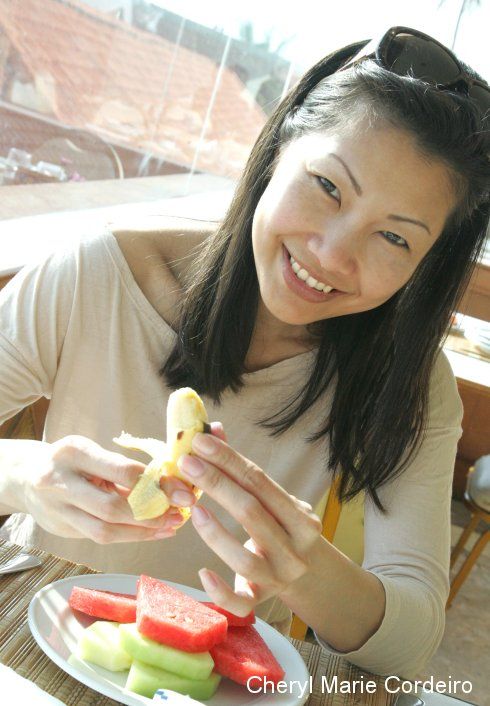
The trade winds blow cool in the mornings in the tropics of Sanur, Bali, where the full flavoured smaller apple banana variety is abundant and pleasantly enough included in abundance in the breakfast buffet.
Text and Photo © JE Nilsson and CM Cordeiro 2012

It took five security checks through the various airports from Scandinavia to Indonesia and though it has been about ten years since the Kuta bombing in Bali, security on the tourist island remains tight, the islanders looking apologetic for yet another security check even at the roadside. Considering the peaceful island’s serene philosophy and religion that is 80% Hindu with visible Buddhist influence, and that the small island’s main livelihood is tourism, one feels a tinge of sombre even as tropical sun rays streak across azure skies in this beautiful and untainted Southeast-Asian island paradise. Continue reading ”At the west end of the Lesser Sunda Islands”

The Blue Frog, Shanghai World Financial Center SWFC

The Blue Frog restaurant, Shanghai World Financial Center.

The Blue Frog at the Shanghai World Financial Center.
Text and Photo © JE Nilsson and CM Cordeiro 2012

Even before my first visit to Shanghai, friends were recommending I visit two places, the Shanghai World Financial Center and the Blue Frog restaurant that as a friend put it, served ”very good fusion food”. And I couldn’t have done serendipitously better than by dining at the Blue Frog at the Shanghai World Financial Center! Continue reading ”The Blue Frog, Shanghai World Financial Center SWFC”

Lulling hours in Shanghai, where old meets new

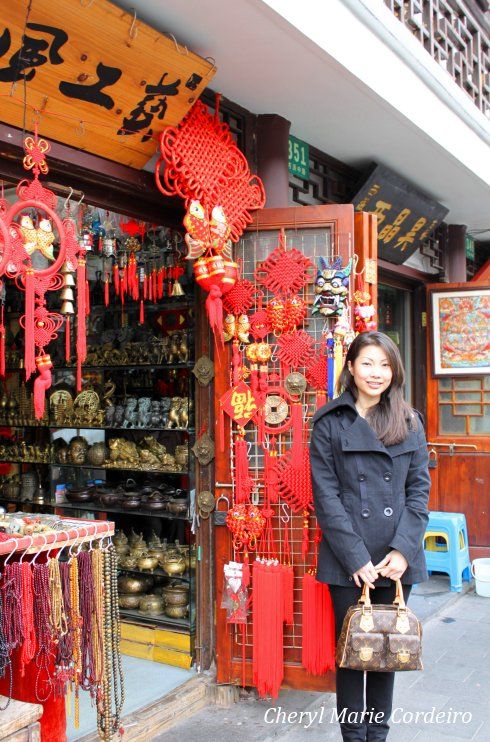
Cheryl Marie Cordeiro, Yuyuan, Shanghai 2011.

Along the streets at Yuyuan, Shanghai.
Text and Photo © CM Cordeiro 2011

Waking up in China’s largest city that is Shanghai, amongst its more than 24 million inhabitants certainly puts a perspective on how much of an impact you might make during a single day in your life when you finally step out the door and make your way around with your errands.

In just about twenty to thirty years, Shanghai as a city has grown at an amazing speed. The skyscrapers seen today along the Huangpu River, The Bund and Lujiazui were non-existent just a stone’s throw back in time, where it would’ve been difficult for most anyone to recognize the landscape and skyline of the central finance district between these decades if you were not at first shown pictures of the landscape from then till now.

The past decade alone has seen a paradigm shift in Shanghai from a city with Communist ideals to one that is cosmopolitan with a global outlook. Much of this is the fruitful result of the Chinese government’s efforts at economic reforms in China beginning in the late 1970s and early 1980s.

If any organization could trace and reflect an aspect of Shanghai’s modern history in global trade and the resulting impact of the Chinese government’s efforts at bringing China and its state-owned enterprises to the global scene, then Baosteel Group Corporation, the second largest steel producer in the world with approximate annual revenues of around USD $21.5 billion would be a good case study to examine. With 45 wholly owned subsidiaries in markets across the world, in countries with as diverse cultures such as Brazil, France, Germany, Russia and in Asian and Southeast Asian countries such as Japan, Hong Kong and Singapore , Baosteel reflects the speed and tenacity at which Chinese organizations are able to make themselves visibly global whilst simultaneously catering to their very demanding and highly competitive domestic market.

Still, amongst the city’s global ambitions supported and run by its busy inhabitants who seem to maneuver through the city via just as many noisy and exuberant vehicles that never cease their honking, you’ll find in Shanghai that some waking hours beckon a certain lull to the senses, and are in effect… quieter than others. And it is in these hours that you can sit, think and breathe the calmer soul of the city as a mist that invites you to contemplate its living as an artfully drawn landscape, one perhaps seen in Chinese watercolour on silk or paper. It is these brief lulling hours of Shanghai, at dawn or just after dusk, that paints a picture of the place both past and present, juxtaposed in front of your very eyes in material form.
Continue reading ”Lulling hours in Shanghai, where old meets new”

Yuyuan street eating and daily practicalities, Shanghai

Cheryl Marie Cordeiro 7 Dec 2011 Shanghai 03a

With the quick glances of distraction observed from tourists and a slight quickening of their pace past the local lunch scene at Yuyuan in Shanghai, where the local people seemed perfectly at east sitting along the roadside with their bowl of rice in one hand and chopsticks in the other, eating whilst waiting for their next customer to walk into the shop, I understood with clearing clarity that for most of Northern Europe, dining was a much more formal affair around a set table.

And the Northern European concept of dining was quite a contrast to this fairly common aspect of people eating on the move or simply eating outdoors in Asia in general. Whether in India or the various equatorial countries of Southeast-Asia such as Thailand, Vietnam, Singapore and Indonesia, or the more temperate regions of China, food sold along the streets in wheel carted food stalls and eating along the streets is as practical and nomadic as having all your goods for sale stacked onto a single bicycle or motorcycle and sold wherever you found a customer along the street.

Continue reading ”Yuyuan street eating and daily practicalities, Shanghai”

Lujiazui by night, Shanghai

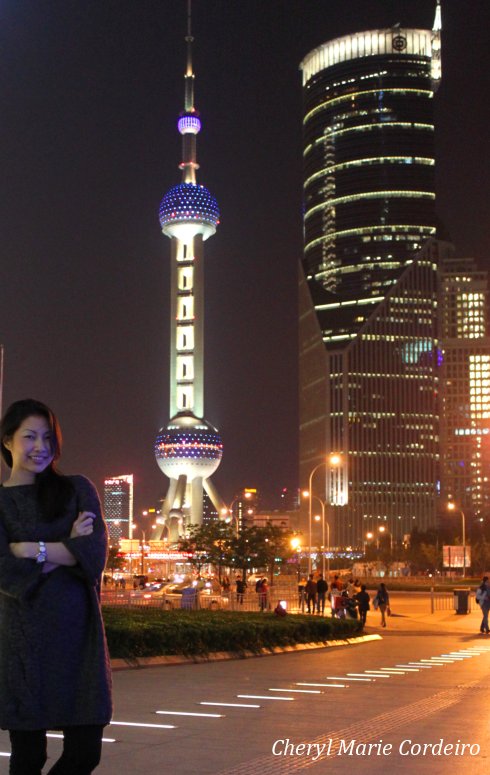
Cheryl Marie Cordeiro at Lujiazui, Shanghai 2011

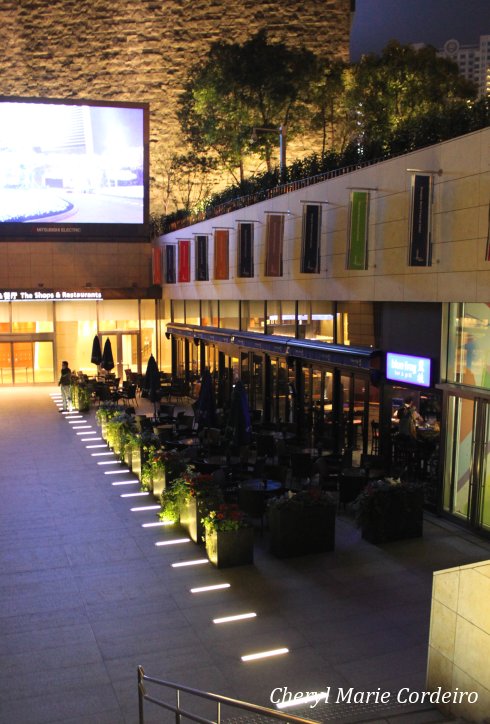
Lujiazui by night. In the background, lit blue, the Oriental Pearl Tower.
Text and Photo © K Meeks and CM Cordeiro 2011

When in Shanghai, the last place I expected to find myself exploring come sundown is Lujiazui, the city’s financial district, as the more popular of nightspots would include Xintiandi or even the quieter street of Hengshanlu lined with all sorts of eateries from Turkish and Thai to Hunan cuisine.

Continue reading ”Lujiazui by night, Shanghai”