Redefining Energy Innovation: How Strategic Action Fields (SAFs) are Transforming the Energy Landscape

Image credit: Gencraft

What is a Strategic Action Field (SAF)?

Strategic Action Fields (SAFs) [1] are meso-level social orders where various actors—established players, challengers, and sometimes governance units—interact, compete, and collaborate. These fields are characterized by ongoing power struggles, negotiations, and cooperation, leading to the creation of new norms, practices, and institutional arrangements. In the context of societal and technological changes, SAFs can provide a framework for understanding how different sectors converge and evolve through the actions of socially skilled actors who navigate and shape these complex interactions.

Transforming Energy: From Living Labs to Strategic Action Fields, the Example of Germany

In the face of global climate challenges, the transformation of energy systems has become imperative. In the example of Germany, the country’s innovative approach to this transformation is setting a benchmark by bringing together energy, mobility, and Information Technology. In a 2017 [2] study, scientists explore how living labs are evolving into strategic action fields, fostering intersectoral collaboration and innovation. Continue reading ”Redefining Energy Innovation: How Strategic Action Fields (SAFs) are Transforming the Energy Landscape”

A Walkabout at Borgeby Fältdagar 2024

Text & Photo © CM Cordeiro & JE Nilsson 2024


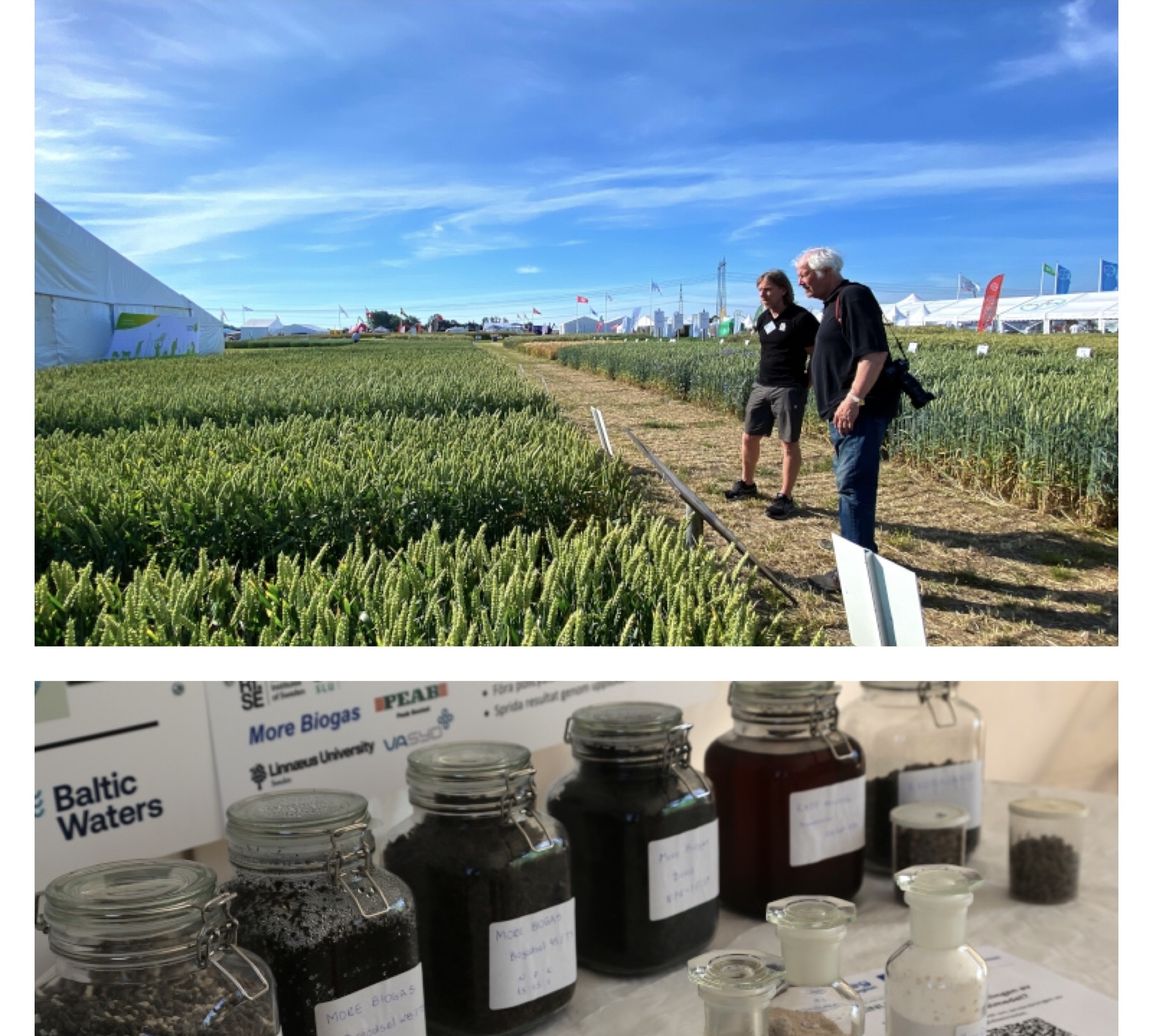
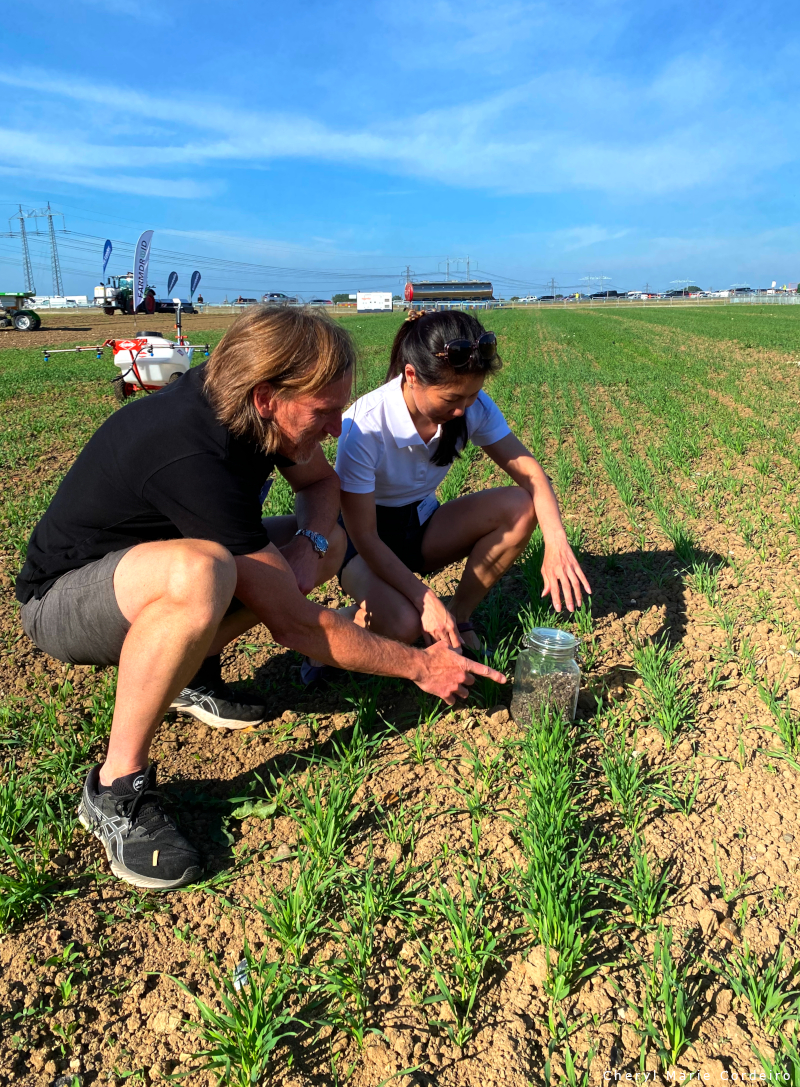
What an incredible experience at Borgeby Fältdagar 2024! On one of the warmest summer days in southern Sweden, this arena welcomed 19,900 visitors and 415 exhibiting companies. This event was the perfect mix of business networking and family fun! The two-day program was packed with fascinating seminars and cutting-edge technology showcases.

Here are the top three seminar topics I found most interesting:

  1. Technology You Didn’t Know Existed – Can It Revolutionize Future Agriculture?
    • Details: Karolina Muhrman and Per Frankelius from Agtech Sweden blew us away with groundbreaking technologies like precision agriculture tools, autonomous machinery, and advanced data analytics. These innovations can make farming more productive and sustainable. It was especially inspiring to see how regions like Östergötland, which attract global investments in agtech and foster close collaboration between research institutions and industry, are leading the way. The area’s strengths in innovation, technology, and sustainable development make it a hotbed for agricultural innovation.
  2. Inflation is Receding – Here Come the Interest Rate Cuts
    • Details: Anders Hansson from Sparbanken Skåne and Swedbank shed light on the upcoming economic shifts, emphasizing that with inflation receding, we can expect interest rate cuts. This is fantastic news for farmers, as lower borrowing costs will make it easier to invest in new technologies and infrastructure. It’s a much-needed boost that could significantly ease financial pressures on the agricultural sector.
  3. Sustainable Solutions for Future Agriculture: Circular Fertilizers
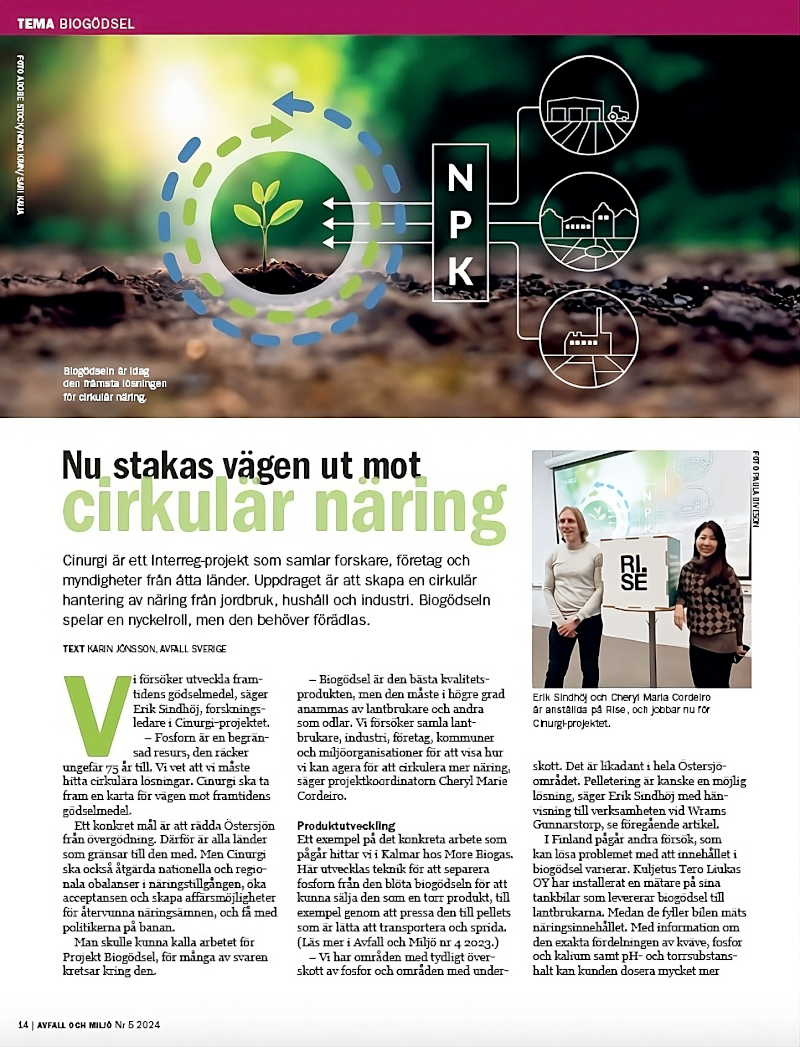
    • Details: The seminar for the EU Interreg Baltic Sea Region (BSR) core project CiNURGi by  RISE Food and Agriculture, was all about moving towards circular fertilizers. They highlighted how using local, sustainable fertilization methods can improve soil health and reduce our reliance on conventional mineral fertilizers. This is a crucial step towards building a more resilient and eco-friendly farming system.

Borgeby Fältdagar 2024 not only showcased the latest in agricultural technology but also provided valuable insights into the economic trends affecting our sector. The integration of these technologies is expected to drive efficiency, reduce environmental impact, and enhance the overall profitability of farming operations. Continue reading ”A Walkabout at Borgeby Fältdagar 2024”

EU Interreg Baltic Sea Region (BSR) Core Project CiNURGi 2023-2027


CiNURGi Project Summary

CiNURGi (6.5mEUR 2023-2027) is an EU Interreg BSR core project aimed at developing a circular economy for nutrients in the Baltic Sea Region. The initiative focuses on upgrading current infrastructure and technology to enhance nutrient recovery from biomass and resource streams from agricultural, municipal, and industrial sources. The project’s goal is to facilitate efficient nutrient use and promote the use of recycled fertilizer products.

Objectives and Strategic Alignment

The project aligns with several regional and European strategies, including:
1. HELCOM Baltic Sea Regional Nutrient Recycling Strategy and Baltic Sea Action Plan.
2. EU’s Circular Economy Action Plan under the EU Green Deal.
3. Integrated Nutrient Management Action Plan of the Farm to Fork Strategy.
4. EUSBSR Policy Areas Nutri and Bioeconomy. Continue reading ”EU Interreg Baltic Sea Region (BSR) Core Project CiNURGi 2023-2027”

HCII 2023 Copenhagen, Denmark, July 23–28
Communicating Sustainability Online: A Soft Systems Methodology and Corpus Linguistics Approach in the Example of Norwegian Seafood Companies

Human Computer Interaction (HCI) in Business, Government and Organizations, 10th International Conference, HCIBGO 2023, Held as Part of the 25th HCI International Conference, HCI International 2023, Copenhagen, Denmark, July 23–28, 2023, Proceedings, Part II Conference proceedings 2023.

Abstract

This article presents a qualitative case study of the Norwegian seafood industry’s sustainability communication on corporate websites. The research questions focused on how sustainability is communicated, and the communication channels employed by Norwegian seafood companies. The study found that sustainability is communicated through ecological certification, awareness towards the environment and social compliance, and engagement in knowledge exchange. The study highlights the need to create standardized language and a coherent discourse for competitive advantages in ecologically value-added products and digital services. Companies can use underutilized digital resources such as podcasts and direct online sales to consumers to improve stakeholder engagement. The study suggests the direct and active involvement of consumers in designing products that consumers desire, which can increase market share for the Norwegian seafood industry. The limitations of the study are the lack of feedback from small to medium-sized companies, limiting the generalizability of the findings. The study recommends that the Norwegian seafood industry supports developing digital service resources for small and medium-sized companies to remain competitive in the long term.

Keywords

sustainability, corporate online communication, seafood, soft systems methodology, corpus linguistics

Cite as:
Lindström, N.B., Cordeiro, C.M. (2023). Communicating Sustainability Online: A Soft Systems Methodology and Corpus Linguistics Approach in the Example of Norwegian Seafood Companies. In: Nah, F., Siau, K. (eds) HCI in Business, Government and Organizations. HCII 2023. Lecture Notes in Computer Science, vol 14039. Springer, Cham. https://doi.org/10.1007/978-3-031-36049-7_25

The Nexus approach to natural resources management

Figure 1. A VOSviewer bibliometric visualization for the keywords, ”nexus”, ”transformative” and ”tools”.

The word and concept of most interest for me this year is nexus, defined broadly as a connected group or series. When placed in the context of natural resources management, a nexus framework renders a system of systems perspective. But which fields of knowledge are reflected in research and current business practices in natural resources management, and how are these various fields of study and business sectors interconnected?

Continue reading ”The Nexus approach to natural resources management”

Consumer Empowerment in Agroecosystems Management


Consumer Empowerment in Agroecosystems Management

Download the article (PDF)

Publication Information
  • Author: Cheryl Marie Cordeiro
  • Publication: Today’s Manager (Official quarterly publication of Singapore Institute of Management)
  • Issue: Issue 4, 2021
  • Pages: 27–29
  • Section: Business / The Nordic Perspective
APA Reference

Standard Format:
Cordeiro, C. M. (2021). Consumer empowerment in agroecosystems management. Today’s Manager, 4, 27–29. Singapore Institute of Management.

Continue reading ”Consumer Empowerment in Agroecosystems Management”

COVID-19 Changes at the Office: Digital Activities that Endured

”`html


COVID-19 Changes at the Office: Digital Activities that Endured

Download the article (PDF)

Publication Information
  • Author: Cheryl Marie Cordeiro
  • Publication: Today’s Manager (Official quarterly publication of Singapore Institute of Management)
  • Issue: Issue 2, 2021
  • Pages: 31–32
  • Section: Business / The Nordic Perspective
APA Reference

Standard Format:
Cordeiro, C. M. (2021). COVID-19 changes at the office: Digital activities that endured. Today’s Manager, 2, 31–32. Singapore Institute of Management.

Continue reading ”COVID-19 Changes at the Office: Digital Activities that Endured”