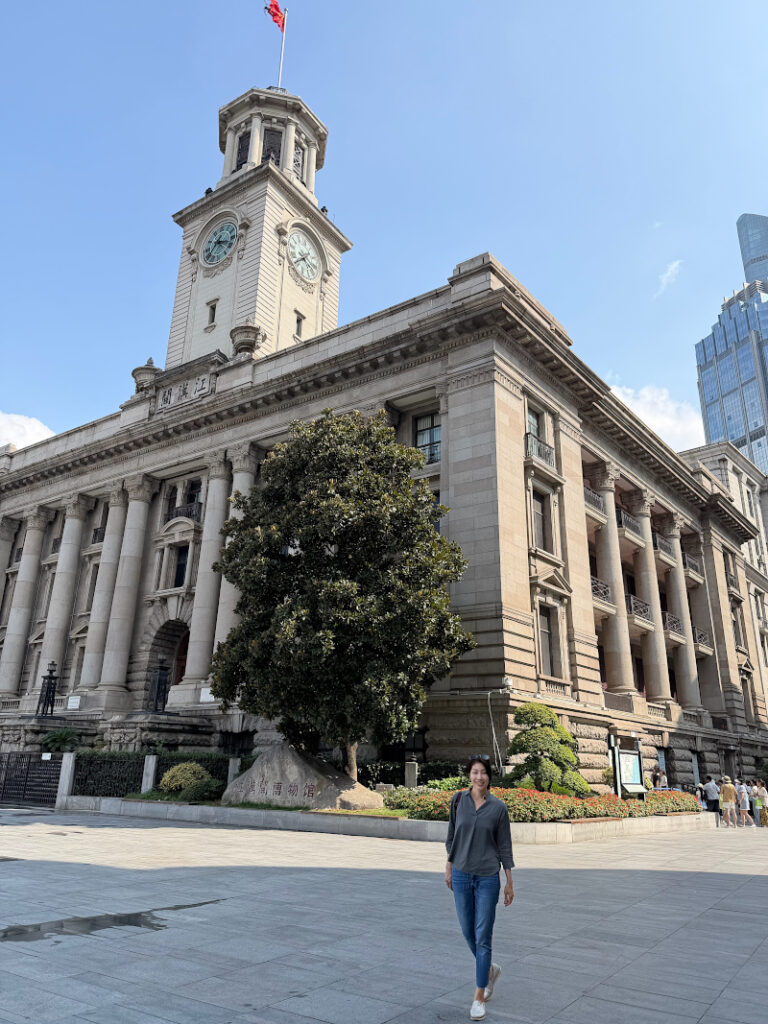
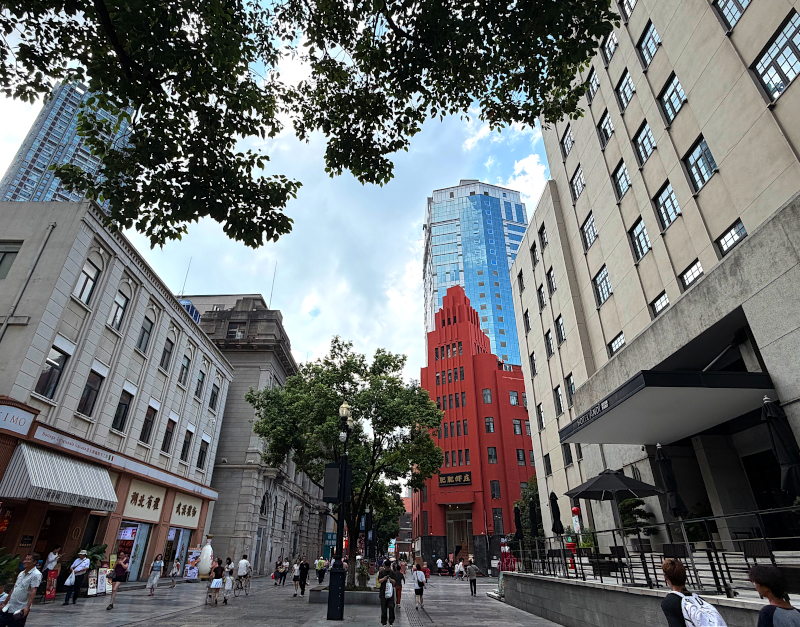
The Jianghan Customs House clock tower, the street’s landmark since the 1920s.
Photo and text copyright © 2026 CM Cordeiro
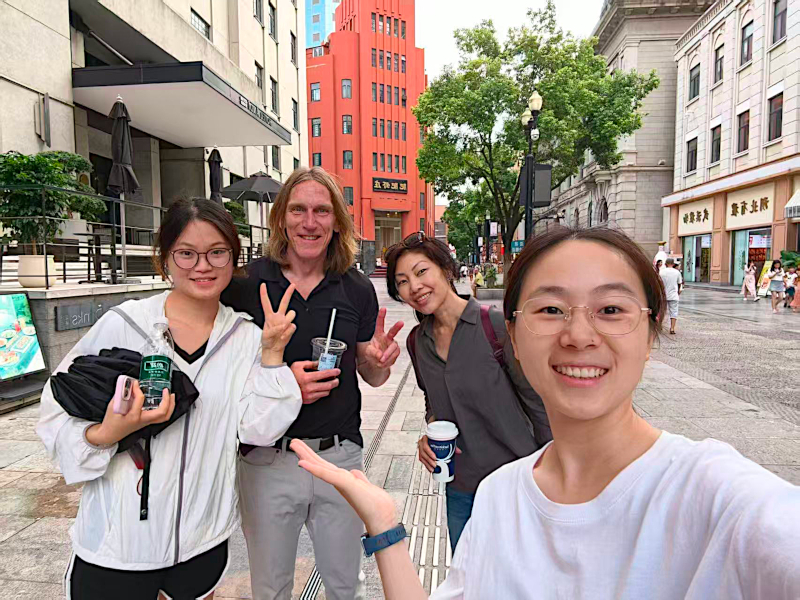
There may be no better way to understand a region, a country, than to let its doctoral students show you around, first their work, then their favourite haunts. Our day with them began quietly, in a cool molecular-biology corridor where they spend their hours coaxing answers out of the invisible world. From there it spilled outdoors, into an unhurried wander down a hundred-year-old shopping street, and finally gathered, as the best days in Wuhan do, around a steaming tray of crayfish, sleeves pushed up, fingers stained happily red, everyone talking over everyone. What ties those three scenes together is more than good company. It’s a whole food system, quietly on display: the microbes that keep crops and soils healthy, the paddies where this city’s cherished summer catch is raised, and the streets and tables where all of it finally comes home.
Morning: microbes, and the students who study them
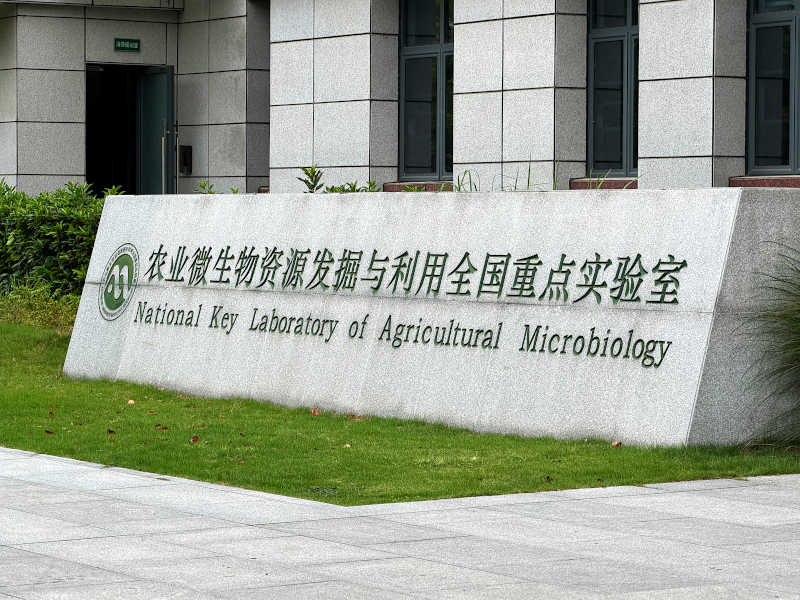
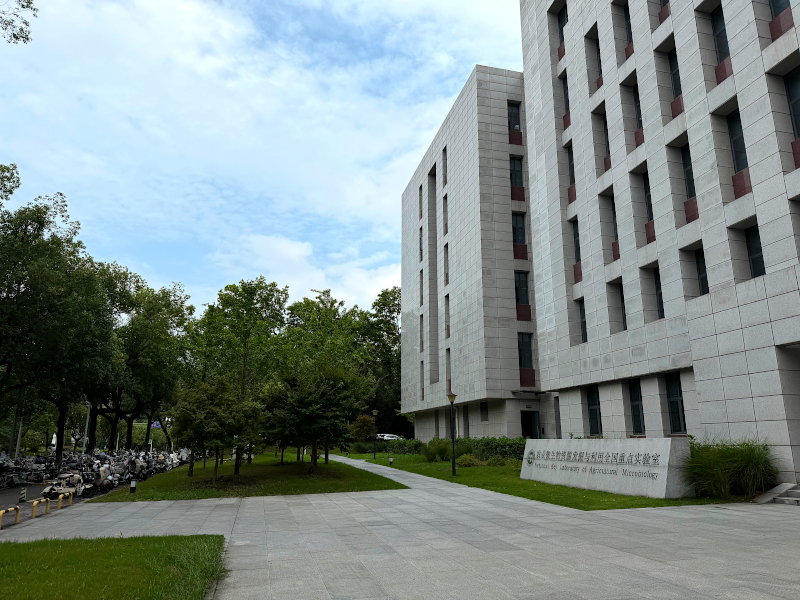
We spent the morning at Huazhong Agricultural University (HZAU), one of China’s leading agricultural universities, in the company of the graduate students who work in its National Key Laboratory of Agricultural Microbiology. If that name sounds abstract, the corridor makes it wonderfully concrete: wall after wall of research posters on the microbes that fix nitrogen, fend off crop disease, and turn waste into fertiliser. It is the diligent, invisible workforce underneath every field we had walked through earlier in the trip, and here were the people who spend their days getting to know it.
Agricultural microbiology is quietly one of the most important sciences for a sustainable food future. The very principles a compost plant leans on to turn manure into fertiliser, things like inoculants, fermentation and nutrient cycling, are studied here at the level of genes and microbial communities. Walking the labs with the students was the human side of all that: this is the next generation of researchers who will help decide how China feeds itself with less chemical input, and their curiosity was infectious.
It helps that they are working somewhere clearly on the rise. By the Nature Index (accessed Aug. 2026), which tracks output across a set of high-selectivity science journals, HZAU’s strongest research sits exactly where we were standing, in plant, crop and biological sciences, and its high-quality output has roughly tripled over the past five years. Globally it ranks mid-table, but within agriculture it is a genuine heavyweight, closely networked with China’s national agricultural-science institutes.
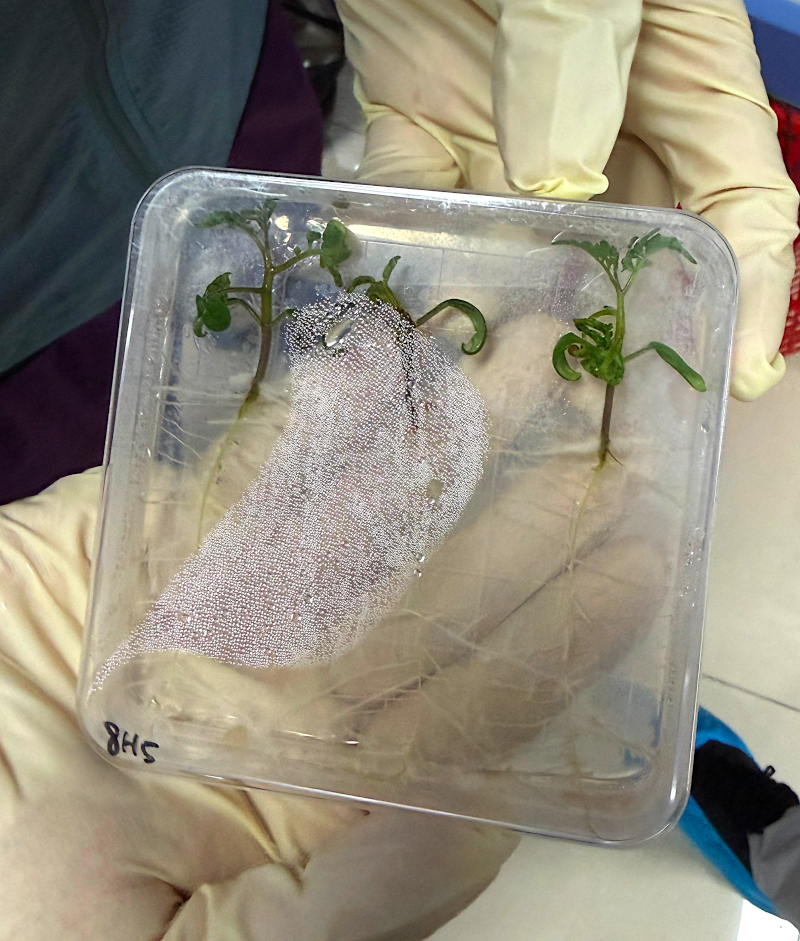
The study of microbes of tomato saplings.
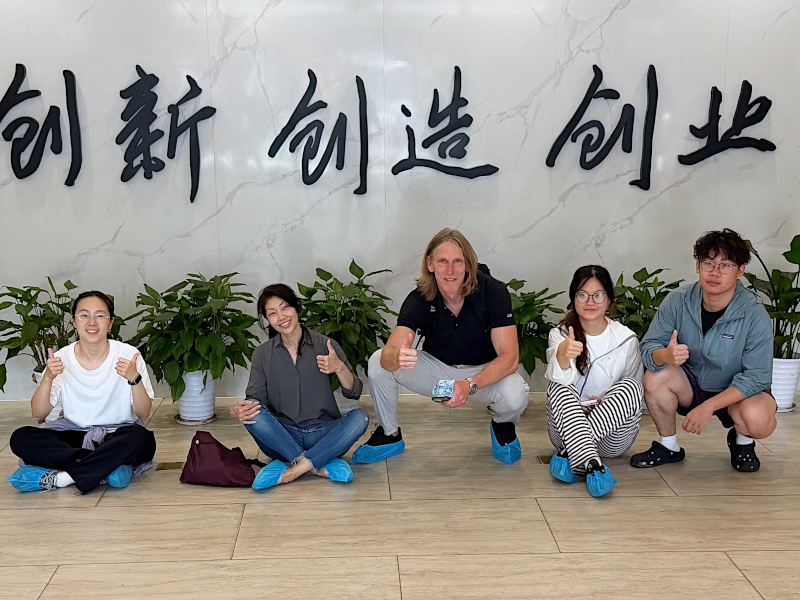
With graduate students under the motto “Innovation · Creation · Entrepreneurship” (创新 创造 创业).
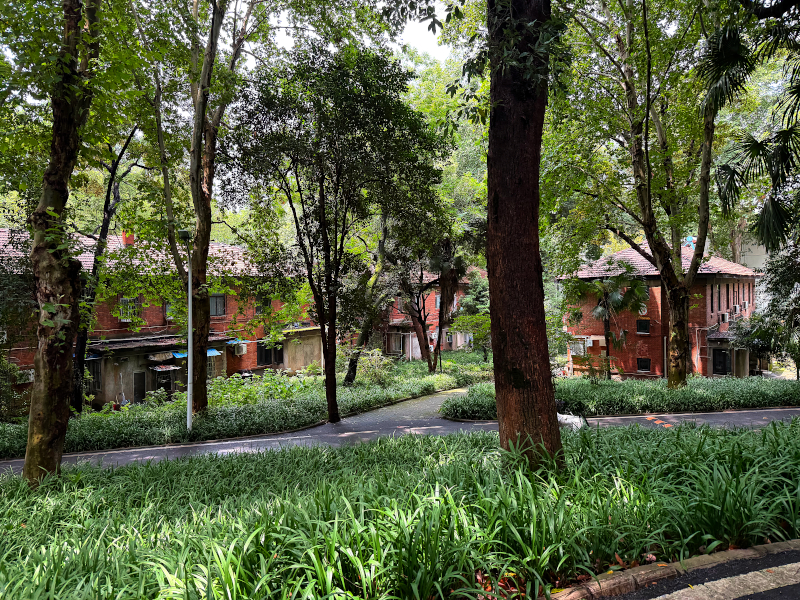
Green, working grounds on the shore of South Lake.
The campus: a university that is also a farm
It is worth lingering on the grounds, because HZAU has one of the most beautiful and unusual campuses in China. It sprawls across roughly 495 hectares on the shore of South Lake (Nanhu), surrounded on three sides by water and backed by green hills, and wrapped around the small rise that gives the university its affectionate nickname, ”Lion Hill” (狮山). Much of that lushness is not ornamental but working land: teaching-and-research farms, orchards, tea gardens, fish ponds and wetlands, so the campus is quite literally a living agricultural laboratory. Fittingly for a university renowned for its rapeseed research, its spring fields of rapeseed flowers, blooming bright yellow around March, are a local sight in their own right.
It also runs like a small self-contained town. The residential and commercial quarter tucked into the campus has its own supermarket, pharmacy, canteens and eateries, banks and clinics, enough that students, staff and their families can largely live, study and shop without ever leaving the grounds. For a visitor it makes the university feel less like a campus and more like a leafy district of the city.
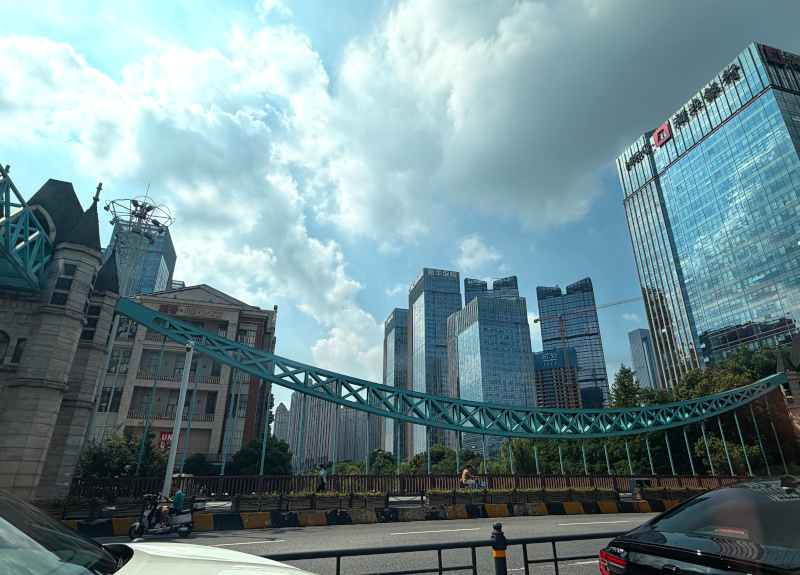
Midday: Jianghan Road, a living museum
After a full morning of lab tours and student talk, we did as China has long done at midday and simply paused for a rest, its own tradition of the noon break, not unlike the Spanish siesta. A little after noon we crossed from campus into Hankou, to Jianghan Road Pedestrian Street, Wuhan’s most historic shopping street and, at 1,600 metres, often billed as the ”longest pedestrian street under heaven.” The avenue it grew from dates to 1906, giving it well over a century of continuous commercial life. This was once the heart of the Hankou foreign concessions, and the buildings still show it: a streetscape of European Continental, Roman, Byzantine, Renaissance and Art-Deco facades that locals rightly call a ”museum of 20th-century architecture.”
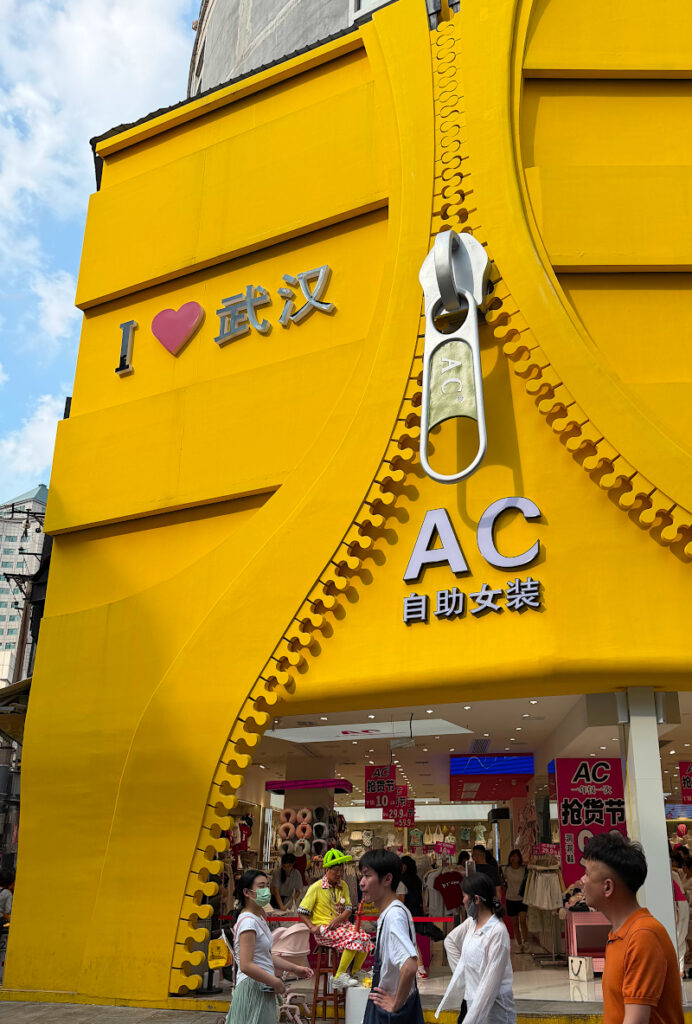
A century of continuous commerce: the crowds on Jianghan Road.
At the foot of the street stands the Jianghan Customs House (Jianghan Guan), its 1920s clock tower still marking the hours over crowds that have not thinned in a hundred years. The sights and sounds are the real attraction: chimes from the tower, the hiss and clatter of snack griddles, queues spilling out of heritage food shops, ”I ❤ Wuhan” storefronts in electric yellow, bronze street sculptures worn shiny by selfies, and the ever-present hum of a thousand ”cutified” electric scooters decked out with sunshades, quilted handlebar mitts and plush seat covers. It is a street that has been busy since before the light bulb, and it feels it.
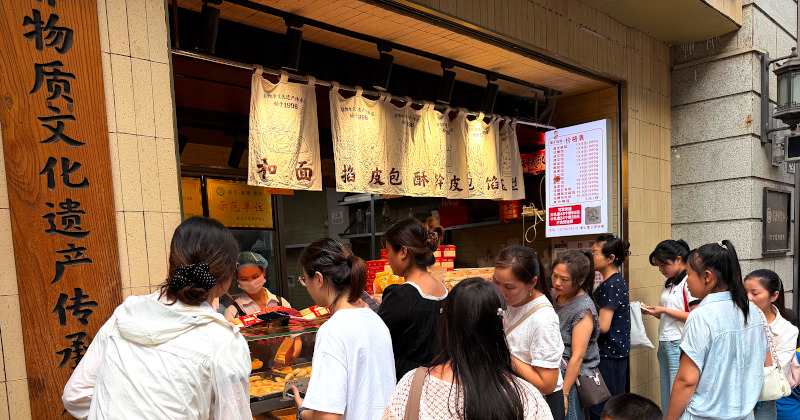
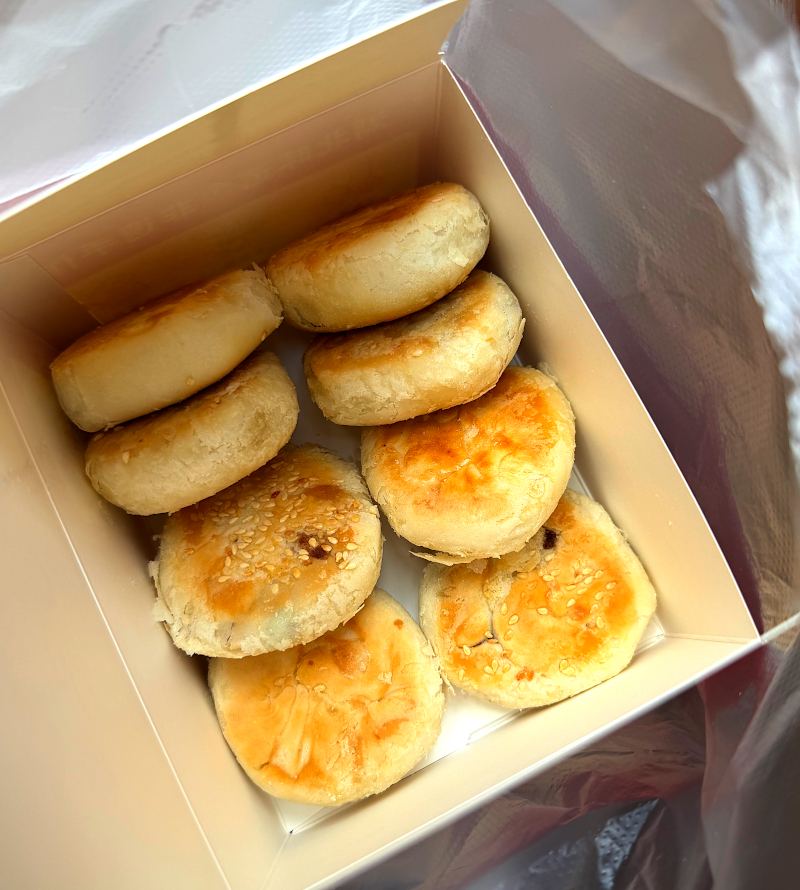
It was still short of dinner, but the students insisted we try some of Wuhan’s traditional sweets. They steered us to a busy bakery turning out fresh flaky pastry biscuits, the kind whose crumbly, layered shell comes from folding a lard-rich dough into a softer one before baking. It is a technique with deep roots across southern China, and one that sailed with the Chinese diaspora: you will meet its relatives as wife cakes in Guangzhou and Hong Kong, and as tau sar piah in the old Teochew and Hokkien bakeries of Singapore. The fillings ran from sweet to savoury, red bean and lotus seed paste and mung (green) bean among them.
Evening: crayfish, the taste of a Wuhan summer
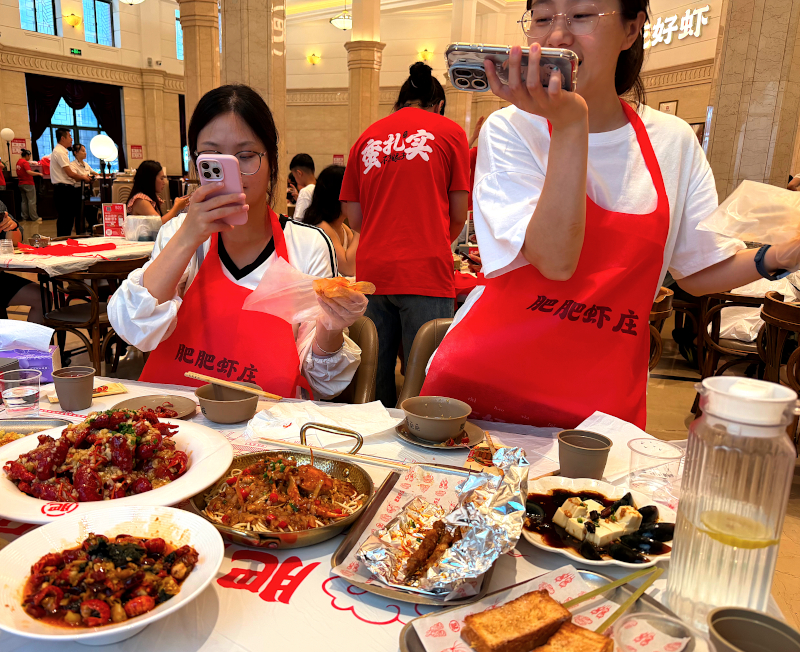
It seemed dinner was the day’s true centre of gravity: xiaolongxia or crayfish at Feifei Crayfish House (肥肥虾庄), a Wuhan institution serving “authentic Han-flavour crayfish” since 2008. Aprons on, we worked our way through the city’s summer canon: you men da xia (braised crayfish), garlic and fiery mala versions, crayfish tumbled through noodles, with toasted mantou and cool sides to take the edge off the chilli. In Hubei, eating crayfish is barely a meal in the ordinary sense. It is an excuse for family and friends to gather around a long, languid table and talk for hours, unhurried, sleeves up, hands happily messy.
What’s really on the plate: a sustainable supply chain
Hubei is the crayfish heartland of China, and the crustacean on our table almost certainly began its life not in a pond but in a rice paddy. The innovation is a system called rice–crayfish co-culture (稻虾共作), and it is one of the quiet success stories of sustainable agriculture. The crayfish (Procambarus clarkii) live in a perimeter trench, roughly 10–20% of the field, while rice grows in the middle. After the autumn harvest the field is flooded and the crayfish spread out over the submerged rice stubble through winter, feeding, foraging and fertilising as they go.
The environmental maths is striking. Set against rice grown alone, the integrated system has been measured to cut pesticide costs by about 47%, fertiliser costs by about 53%, and ploughing by 100%, because the crayfish graze on weeds and pest insects (rice planthoppers and stem borers among them) and their waste feeds the soil, while returned rice straw closes the nutrient loop. Farmer income rose by roughly US$4,900 per hectare. Little wonder the area under this system grew about ninefold between 2007 and 2019. Hubei leads the country, and co-culture now supplies the large majority of China’s crayfish, in a country that itself produces more than 90% of the world’s supply.
From paddy to plate is then a genuine industrial chain. Neighbouring Qianjiang, branded ”China’s crayfish capital,” anchors a supply system whose total output value reached about 184 billion yuan in 2024, with Hubei’s crayfish output at 1.44 million tonnes. The city’s trading centre ships over 2,000 tonnes a day to more than 600 cities, and its 48 large processors, turning out ready-to-eat crayfish, sauces and oils, can handle 800,000 tonnes a year. The plate in front of us was the visible end of breeding, paddy farming, cold-chain logistics and catering that stretches across the province.
Simply put, this is about as local and low-mileage as a protein gets: homegrown in Hubei’s own paddies, moved along a short, largely in-province supply chain that can carry a fresh catch from field to city restaurant in a day or two, and sustainably farmed by a method that raises rice and crayfish from the same water. Seasonal, traceable and close to source, it is a rare case where the most delicious option is also the low-input one.
The loop
The microbes the HZAU students study keep soils alive; the rice–crayfish paddies turn that biology into a low-input way to grow two foods at once; the supply chain moves it; and Jianghan Road and a crayfish house are where a whole system finally becomes dinner. A good travel day shows you a place. This one, without trying, showed us a food system, from the microbe to the meal.
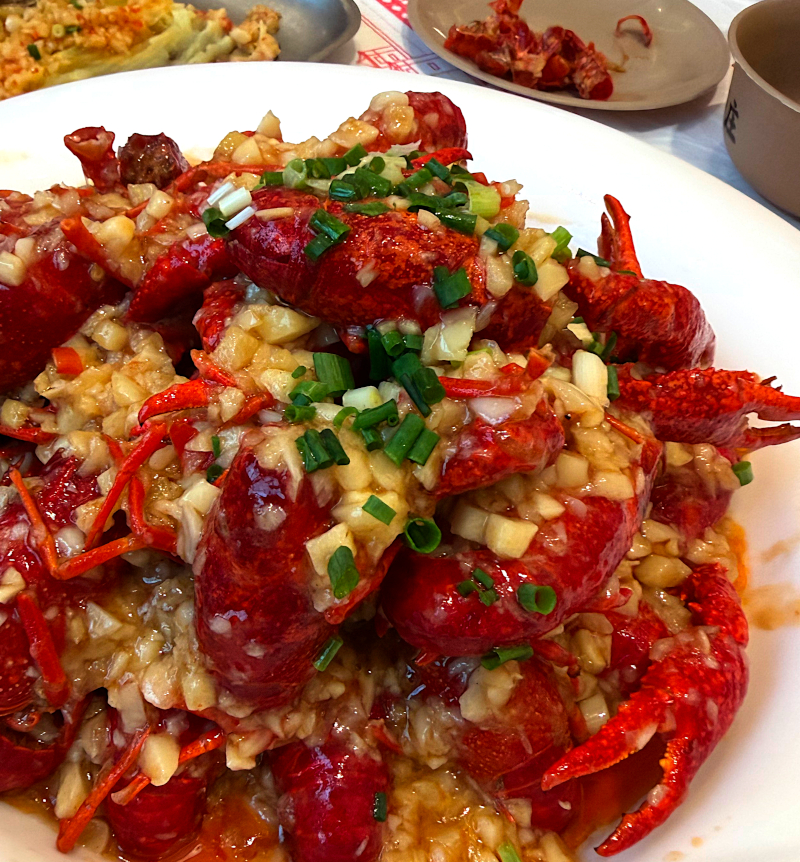
Braised crayfish (油焖大虾), the centrepiece of a Wuhan summer table.
Bibliography
Peer-reviewed:
- Jiang, Y., & Cao, C. (2021). Crayfish–rice integrated system of production: an agriculture success story in China. A review. Agronomy for Sustainable Development, 41, 68. https://doi.org/10.1007/s13593-021-00724-w
- Yuan, P.-L., Wang, J.-P., Guo, C., Guo, Z.-Y., Guo, Y., & Cao, C.-G. (2022). Sustainability of the rice–crayfish farming model in waterlogged land: A case study in Qianjiang County, Hubei Province, China. Journal of Integrative Agriculture, 21(4), 1203–1214. https://doi.org/10.1016/S2095-3119(21)63787-5
- Hou, J., et al. (2021). The sustainability of rice–crayfish coculture systems: a mini review of evidence from Jianghan plain in China. Journal of the Science of Food and Agriculture, 101. https://doi.org/10.1002/jsfa.11019
Industry / news and general references:
- People’s Daily Online. (2025, May 26). Crayfish industry enjoys long-term prosperity in Qianjiang, C China’s Hubei [2024 industry figures]. https://en.people.cn/n3/2025/0526/c90000-20319621.html
- Jianghan Road Pedestrian Street [history & architecture]. China Educational Tours travel guide. https://www.chinaeducationaltours.com/guide/wuhan-jianghan-road-pedestrian-street.htm
- Huazhong Agricultural University. National Key Laboratory of Agricultural Microbiology. https://en.hzau.edu.cn/
- Nature Index. Huazhong Agricultural University (HZAU) — institution outputs (accessed Aug 2026). https://www.nature.com/nature-index/institution-outputs/china/huazhong-agricultural-university-hzau/513906bb34d6b65e6a000150